Most "best DMARC monitoring tools" lists are written by a vendor ranking itself first. This one is also written by a vendor, so we have tried to make it checkable: the criteria come first, every price in the table was read from the vendor's own pricing page on 2026-11-04 and is linked, and we say where other tools are stronger than ours. Prices change often, so treat the table as a dated snapshot and confirm on the vendor page before you buy.
The short answer#
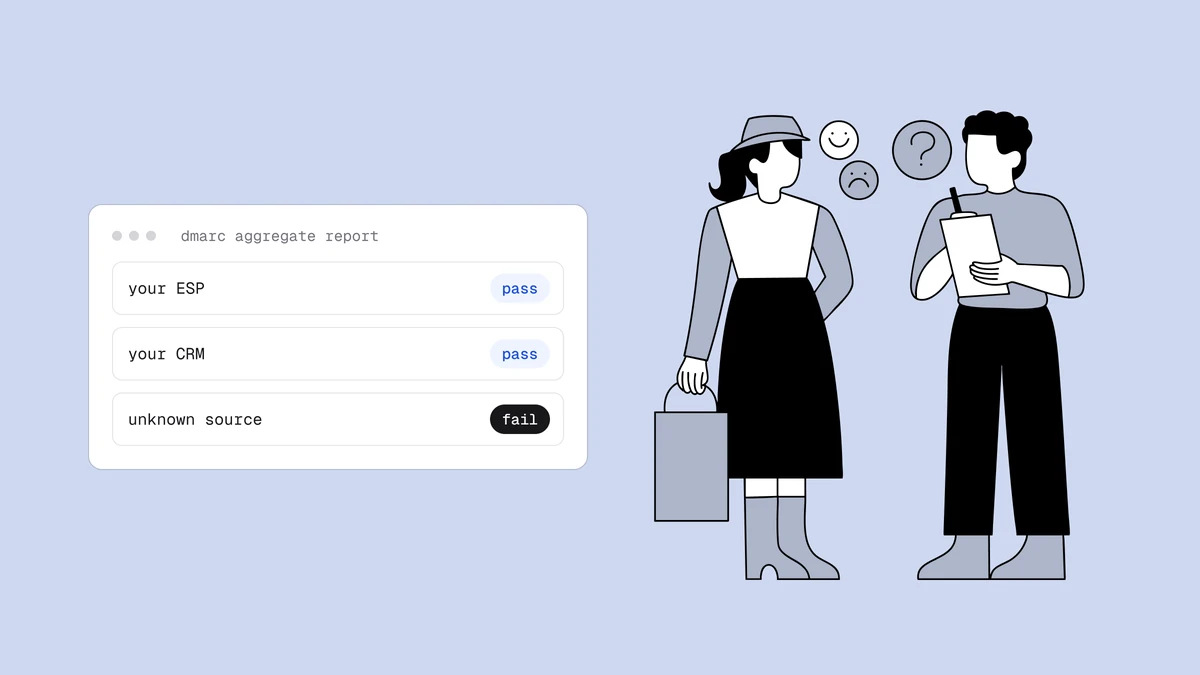
There is no single best tool, because the right one depends on how many domains you have and whether you need hosted DNS features. For one personal or small domain, a free tier is enough to learn from your reports. For a handful of domains, compare price per domain and report history. For many domains or managed enforcement, vendors with hosted SPF, DKIM and MTA-STS services are worth the higher price. Whatever you choose, the job is the same: turn aggregate reports into a list of sending sources, flag the new ones, and show when a legitimate source starts failing. For the background, see how to read DMARC reports.
What to compare#
Decide which of these matter to you before you look at any price list.
- Domains included. The cap is usually the biggest cost driver. Count subdomains you send from, and parked domains you want protected.
- Message volume limits. Many plans cap the messages analyzed per month. A large sender can hit a cap on a small plan.
- History. How many days of data you can look back over. Comparing this month with last quarter is how you spot drift.
- Source naming. Whether IPs are matched to a service name, or you get raw IPs and do the lookup yourself.
- Alerts. Whether you are told about a new source or a failure spike, and by what channel.
- Free tier. Useful for a first look, but check the caps. Several free tiers are limited to one or two domains or to weekly summaries.
- Hosted DNS services. Tools that manage SPF flattening, DKIM or MTA-STS for you. They cost more and tie you to the vendor, but they remove manual DNS edits.
- Other reports. Forensic (failure) reports, TLS reporting, and API access.
- Price per domain. Divide the plan price by the domain cap, in the vendor's own currency, to compare fairly.
Vendor comparison, prices read 2026-11-04#
| Tool | Free option | Paid, as listed | Caps and history | Notable |
|---|---|---|---|---|
| dmarcian | Personal: 2 domains, 1,250 messages a month, non-business use only | Basic $24/mo ($19.99 annual); Plus $240 ($199 annual); Enterprise $600 ($499 annual) | Basic 2 domains, 100k messages, 3 months; Plus 8 domains, 1M, 1 year; Enterprise 15 domains, 5M, unlimited history | SPF, DKIM and BIMI inspectors, TLS reporting, alert center |
| Valimail | Monitor tier is free (5 users, limited automated DMARC) | Enforce and Amplify tiers: not public, contact sales | No domain count shown | Automated DKIM, subdomain management, SOC 2 Type 2 |
| EasyDMARC | No free plan; free trial and free tools | Plus EUR35.99/mo billed annually (list 44.99); Premium EUR71.99 annually (list 89.99) | Plus 2 domains, 3 months; Premium 4 domains, 1 year | DNS manager, sender insights, EasySPF |
| Postmark DMARC Digests | Free: top 10 sources, 7 days of history, weekly email only | $14 per domain per month | Paid: all sources, 60 days of history, dashboard | Weekly or monthly digests, 14-day trial |
| DMARC Report | Core: 1 domain, 10k messages | Guard $25/mo ($275 a year); Shield $75 ($750); Defender $200 ($2,000) | Guard 5 domains, 250k; Shield 10, 1M; Defender 25, 3M | Failure reports, MTA-STS and TLS-RPT on Shield and up, API access |
| URIports | No free plan; 1-month trial, no card | Pebble EUR6/mo (EUR5 annual); Stone EUR28 (25); Mountain EUR110 (100) | Pebble 5 domains, 100k reports; Stone 25, 500k; Mountain 100, 2.5M | DNS monitor and hosted MTA-STS as an add-on from EUR5/mo |
| Red Sift OnDMARC | No permanent free plan; trial | Express from $9/mo billed annually; other tiers not public | Express: up to 4 domains, 1M messages a month, 30 days | Hosted dynamic services for DMARC, SPF, DKIM, MTA-STS, TLS-RPT, BIMI |
| DMARCTrust | Free: 1 domain, 50 reports, 7 days | Starter EUR18/mo; Pro EUR42; extra domain EUR10/mo | Starter 2 domains, 90 days; Pro 5 domains, 180 days | Hosted MTA-STS, SPF optimizer, DNS change alerts |
| DMARCLY | No free tier; 14-day trial | Professional $17.99/mo; Growth $39.99; Business $69; Enterprise $199 | Professional 2 domains, 100k, 2 months; Growth 8, 250k, 4 months; Business 15, 1M, 6 months | DNS timeline, IP reputation monitoring, MTA-STS and TLS-RPT on all plans |
| Qualisend DMARC Reports | None (free report analyzer tool for one file) | $13.99/mo for 1 domain; $139 for 10; $699 for up to 50 | No message-volume tier; daily intake cap per workspace; data kept 400 days; 7, 30 or 90-day views | Source names for about 25 known senders, daily failure email |
Two notes on reading it. The DMARC Report page says "unlimited domains" for all paid plans in one place while its table shows caps of 5, 10 and 25, so confirm which applies. And where a vendor lists a monthly and an annual price, we show both because the gap is large.
What the numbers say#
Using each vendor's own currency, price per domain at the listed caps works out roughly like this: URIports Pebble EUR1.20 at monthly billing (5 domains), DMARC Report Guard $5 (5 domains), DMARCTrust Starter EUR9 (2 domains), dmarcian Basic $12 (2 domains), Qualisend Multiple $13.90 (10 domains), and Postmark $14 (1 domain). These are rough because caps, history, volume and features differ. The low end of the market is crowded and cheap, so price alone rarely decides it.
What does decide it, in our view:
- Volume and history caps matter more than the headline price if you send a lot. dmarcian, EasyDMARC, DMARCLY, DMARC Report, Red Sift and URIports all limit messages or reports per plan, while Valimail and Postmark show no volume cap on the pages we read.
- Hosted DNS services are the real premium feature. Red Sift, DMARCTrust, URIports and EasyDMARC sell some form of hosted SPF, MTA-STS or DNS management. If manual DNS edits are the part you dread, pay for that.
- Free tiers are good for learning. dmarcian, Valimail, Postmark, DMARC Report and DMARCTrust offer one, each with limits that stop being enough once you manage more than a domain or two.
Where Qualisend fits, and where it does not#
Qualisend DMARC reports gives you a report address, parses aggregate reports into a sources table per domain with pass percentages for DMARC, DKIM and SPF, names about 25 well-known senders, and emails you daily when a domain fails at volume or a new failing source appears. It is priced per domain tier, with no message-volume tier, and it works on any Qualisend plan including the free one. At about $13.90 per domain on Multiple it is not the cheapest option in the table: it sits close to Postmark and above most of the low-end vendors, so the case for it is the lack of a volume cap and the option to buy it alone, not price.
The honest limits, so you can rule it out quickly:
- No forensic (RUF) reports. We read aggregate reports only.
- No TLS-RPT. We do not parse TLS reports or check the TLS-RPT record.
- No hosted DNS. We never change your DNS, and we do not host SPF, DKIM or MTA-STS. You edit records yourself.
- No API or webhooks for this product, and alerts are by email only.
- Domains only. There are no IP monitors in this product.
- A daily intake cap per workspace on reports and records.
If you also want DNS record checks on the same domains, our domain health monitoring is a separate add-on at $8.99, $89 or $499 a month for 1, 10 or 60 domains, and you can buy either product without the other. Several vendors above bundle DNS timelines into their DMARC plans, so compare that bundle against buying the two separately.
How to choose in five steps#
- Count your domains, including subdomains you send from and domains you want to protect but never send from.
- Estimate monthly volume so you do not buy a plan with a cap you will hit.
- Decide whether you want hosted DNS. If yes, shortlist the vendors that sell it. If no, look at the cheaper per-domain options.
- Start on a free tier or trial for one domain and check whether the source naming is good enough that you stop doing IP lookups by hand.
- Re-check prices at purchase. The table is a snapshot, not a quote.
Whichever tool you pick, the reports are only useful if you act on them. The none-to-reject guide shows when to move policy, and the alignment troubleshooting guide shows how to fix the sources that fail. If you have not published a record yet, start with the DMARC setup guide. The standard itself is now RFC 9989, published May 2026, which obsoletes the original RFC 7489.
Frequently asked questions
01Is there a free DMARC monitoring tool?
Yes, several vendors offer a free tier: dmarcian, Valimail, Postmark DMARC Digests, DMARC Report and DMARCTrust, each with limits on domains, messages, sources or history as shown on their pricing pages. Free tiers are good for learning from your first reports. Once you manage more than one or two domains, or need longer history, you will usually need a paid plan.
02How much does DMARC monitoring cost per domain?
It varies widely. On the vendor pages we read on 2026-11-04, URIports Pebble works out near EUR1.20 per domain at monthly billing, Postmark's premium tier is $14 per domain, and dmarcian Plus is near $30 per domain at its listed cap. Divide each plan price by its domain cap in the vendor's own currency, remember that history, volume and features differ, and confirm current prices before you buy.
03Do I need hosted SPF, DKIM or MTA-STS from my DMARC vendor?
Only if manual DNS edits are the part you want to avoid. Several vendors sell hosted services that update records for you, usually at a higher price and with some lock-in. If you are comfortable editing DNS, a plain reporting tool is cheaper and enough to get from p=none to p=reject. Qualisend does not host DNS and never changes your records.
04What does Qualisend DMARC Reports not do?
It reads aggregate reports only: no forensic (RUF) reports, no TLS-RPT parsing, no hosted SPF, DKIM or MTA-STS, no API or webhooks, and alerts are by email only. It covers domains, not IPs, and has a daily intake cap per workspace on reports and records. It does name about 25 known senders and emails you when a domain fails at volume or a new failing source appears.
Monitoring tells you who is sending as your domain, not whether the list behind that mail is clean. If you also send to a list, the free plan on the pricing page gives you 100 credits that run the full verification. A well-monitored domain still needs a healthy list to earn the inbox.