

Whether you send from a dedicated IP address or a shared one changes how your sender reputation is built, whether you need to warm up, and how much a bad day costs you. It's a decision most senders overthink in one direction and ignore in the other. Here's the honest trade-off and how to choose.
The short answer#
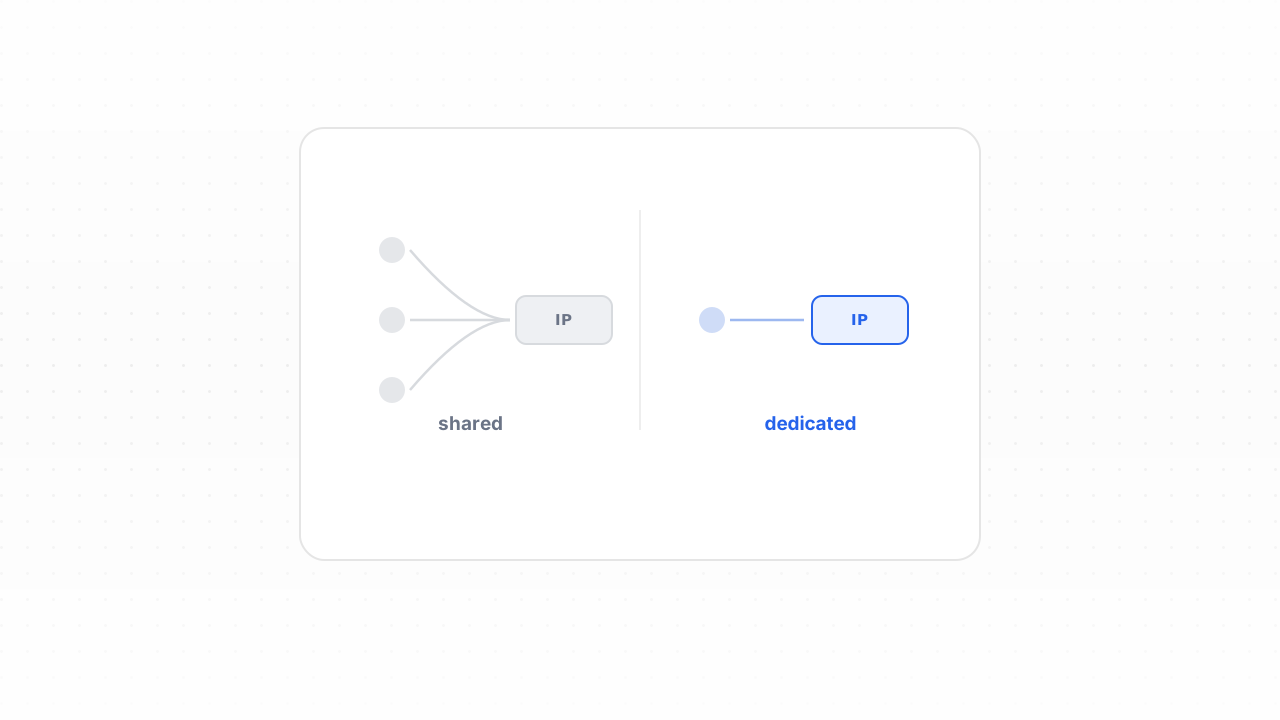
A shared IP pools your sending reputation with other senders on the same address — no warmup needed, and the pool absorbs the ups and downs of your volume, which suits most low-to-moderate senders. A dedicated IP is yours alone: full control of the reputation, but you must warm it up and feed it consistent volume to keep it healthy. Stay shared until your volume is high and steady enough to justify — and sustain — a dedicated IP.
Shared IP: pooled reputation#
On a shared IP (the default at most ESPs), your mail goes out from an address used by many senders, and the reputation is shared across all of them.
- Upside: no warmup required, and the established reputation of the pool means your own volume variability — a quiet week, then a big send — doesn't whipsaw your standing. It's simpler and it's the right default for most senders.
- Downside: you inherit your neighbors. A bad sender in the pool can drag the shared reputation down, and you have less direct control. Reputable ESPs manage their pools carefully to limit this, which is most of what you're paying them for.
Dedicated IP: your reputation, your responsibility#
A dedicated IP sends only your mail, so the reputation is entirely yours to build and entirely yours to ruin.
- Upside: full control and isolation — no neighbors to drag you down, and a clean, predictable reputation you own. For large, consistent senders this is the better long-term position.
- Downside: it starts with no reputation, so it needs a careful warmup, and it needs ongoing consistent volume to stay healthy. A dedicated IP that sends sporadically never builds a stable reputation — providers keep treating it as unfamiliar.
The volume question#
This is the deciding factor, and it's where senders get it wrong. A dedicated IP needs substantial, consistent volume to establish and maintain reputation — enough that providers see a steady, predictable stream from it. A low-volume sender on a dedicated IP is worse off than on a shared one, because they never send enough for the IP to earn a reputation, so every send looks unfamiliar. If your volume is modest or spiky, a shared IP's pooled reputation will serve you better.
Which should you choose?#
A simple rule of thumb:
- Choose shared if your volume is low, moderate, or irregular, or you'd rather not manage warmup and reputation yourself. This is most senders.
- Choose dedicated if you send high volume consistently, want full control of your reputation, and can commit to warming it up and keeping the volume steady.
There's no prize for a dedicated IP you can't keep warm. Match the choice to your actual, sustained sending, not your ambitions for it.
Frequently asked questions#
Is a dedicated or shared IP better for deliverability?#
Neither is universally better — it depends on your volume. For high, consistent volume, a dedicated IP gives you control and a reputation nobody else can damage. For low, moderate, or irregular volume, a shared IP's pooled reputation is more forgiving and doesn't require warmup. The wrong fit hurts: a low-volume sender on a dedicated IP usually has worse deliverability than on a shared one.
Do I need to warm up a shared IP?#
Generally no — the shared IP already carries the pool's established reputation, so there's nothing to warm. What can still be cold is a new domain on that shared IP, which benefits from easing into volume and starting with engaged subscribers. Warmup is mainly a dedicated-IP and new-domain concern.
How much volume do I need for a dedicated IP?#
Enough to send a steady, substantial stream that providers can form a reputation from — sporadic or low volume never lets a dedicated IP establish itself. If you're unsure whether your volume is high and consistent enough, that uncertainty is itself a sign you should stay on a shared IP for now.
Can a bad sender on a shared IP hurt my deliverability?#
It can, which is the main risk of shared IPs — you inherit the pool's reputation, good and bad. This is exactly what a reputable ESP manages for you by policing its pools and separating senders by reputation, so choosing a provider that takes pool hygiene seriously matters more than the shared-versus-dedicated question itself.
Whichever IP you send from, a clean list is what keeps its reputation intact — bounces and spam-trap hits damage a shared pool and a dedicated IP alike. The free plan runs the full verification pipeline, and the deliverability guide covers how IP choice fits the bigger picture.