

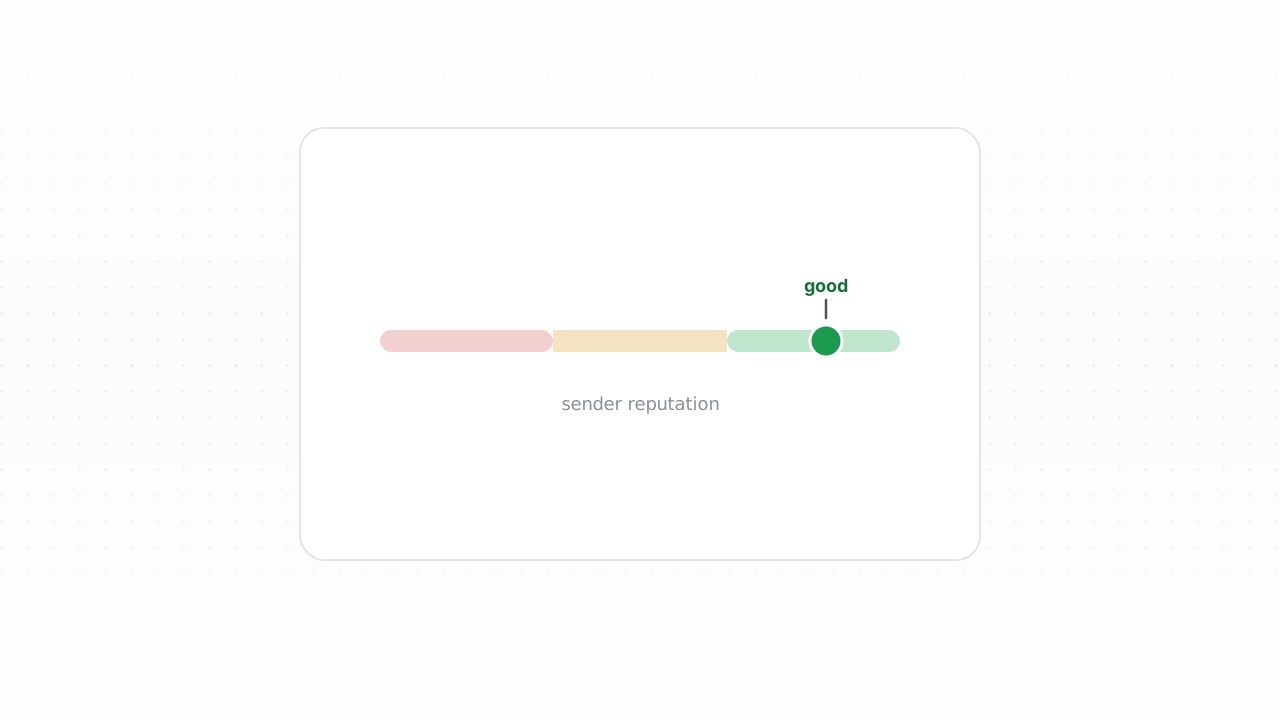
Sender reputation is the running score every mailbox provider keeps on you, and it's the invisible variable behind most "why is my mail going to spam?" mysteries. Two senders can pass the same authentication checks and send the same content, yet one lands in the inbox and the other in spam — because the provider trusts one more than the other. This is what that trust is made of, and how to protect it.
The short answer#
Reputation is built from your sending history: spam complaints, hard bounces, spam-trap hits, how people engage with your mail, and how consistently you send. Providers track it for both your sending IP and your domain, and they act on it every time you send. It is slow to build and fast to lose, which is why the work is preventive — you protect a good reputation continuously, because repairing a damaged one takes weeks.
IP reputation vs domain reputation#
There are two scores, and the difference matters:
- IP reputation attaches to the server your mail is sent from. On a shared IP (most ESPs), you inherit the pooled reputation of everyone else on it; on a dedicated IP, the reputation is entirely yours to build — and to warm up.
- Domain reputation attaches to your sending domain and travels with your brand. It's the one you can't escape by switching servers — and over time it matters more than IP reputation, because it's tied to you, not to infrastructure.
Switching IPs to dodge a bad reputation doesn't work if your domain reputation is the problem. Fix the cause, don't move the address.
What moves your reputation#
Providers weigh a handful of signals, roughly in this order of impact:
- Spam complaints. The single loudest negative signal — someone hitting "report spam". Keep the rate under the ~0.3% providers watch for; ideally far below.
- Hard bounces. Mailing dead addresses signals you don't maintain your list. Sustained bounces drag reputation down fast.
- Spam-trap hits. Hitting a spam trap is strong evidence of poor list hygiene and can get you blocklisted.
- Engagement. Opens, clicks, and replies build reputation; being ignored, deleted unread, or filed as spam erodes it. Engaged recipients are the best reputation asset you have.
- Volume and consistency. Steady, predictable sending reads as legitimate; a sudden spike from a quiet domain reads as a compromised account or a spammer.
- Authentication. SPF, DKIM, and DMARC are the prerequisite — without them, there's no identity to attach a reputation to in the first place.
How to protect a good reputation#
None of this is exotic; it's discipline applied consistently:
- Verify your list so hard bounces and spam-trap hits — the two fastest ways to lose reputation — mostly don't happen. Removing dead addresses before you send is the highest-leverage preventive step.
- Collect with permission and make unsubscribing easy, so complaints stay low.
- Send consistently to engaged people, and sunset the ones who've gone quiet.
- Warm up any new domain or IP rather than starting at full volume.
- Monitor with Google Postmaster Tools and Microsoft SNDS, which show your reputation and spam rates as the providers themselves see them.
How to repair a damaged reputation#
There's no reset button, and anyone selling one is selling snake oil. Recovery is slow and deliberate:
- Fix the cause first. Clean the list, repair authentication, and stop whatever generated the complaints or bounces — otherwise you're pouring water into a leaking bucket.
- Slow down and re-warm. Cut volume sharply and send only to your most engaged subscribers — the people most likely to open and least likely to complain — then rebuild volume gradually.
- Be patient and watch the tools. Reputation is earned back over weeks of consistent good sending. Track Postmaster Tools to confirm it's recovering before you scale back up.
Frequently asked questions#
What is a good sender reputation?#
A good reputation means providers consistently place your mail in the inbox, with spam complaints well under 0.3%, hard bounces near zero, and healthy engagement. Google Postmaster Tools shows a Domain and IP Reputation rating (High / Medium / Low / Bad) — "High" is the goal. There's no single universal number; it's the composite of your sending behavior over time.
How do I check my sender reputation?#
Use the providers' own free tools: Google Postmaster Tools shows your domain and IP reputation and spam rate for Gmail, and Microsoft SNDS does the same for Outlook and Hotmail. Third-party services estimate a reputation score, but the provider tools show you what actually decides placement to their users.
How long does it take to repair a damaged sender reputation?#
Weeks, not days — and only after you've fixed the underlying cause. Reputation is built from a rolling history of your sending, so it recovers as that history fills with good behavior: low complaints, low bounces, and real engagement. Slowing down and mailing only your most engaged subscribers speeds it up; there is no instant fix.
Is IP or domain reputation more important?#
Both matter, but domain reputation matters more over time because it's tied to your brand and travels with you regardless of which server or ESP you use. IP reputation matters most on a dedicated IP you're warming up, or on a shared IP where a bad neighbor can affect you — but you can't outrun a poor domain reputation by changing IPs.
The two fastest ways to lose reputation — hard bounces and spam-trap hits — are also the most preventable. The free plan runs the full verification pipeline so you can strip the dead addresses out before they cost you, and the deliverability guide covers the rest of the levers that keep providers trusting your mail.