

If you send email from inside the EU, the addresses on your list are personal data, and the tool you use to clean them is processing that data on your behalf. That makes email verification a data-protection question as much as a deliverability one — and the single biggest variable is where in the world your list actually gets processed. This guide walks through how GDPR generally treats email verification, why data residency matters, and the questions worth asking any vendor before you upload a file.
The short answer#
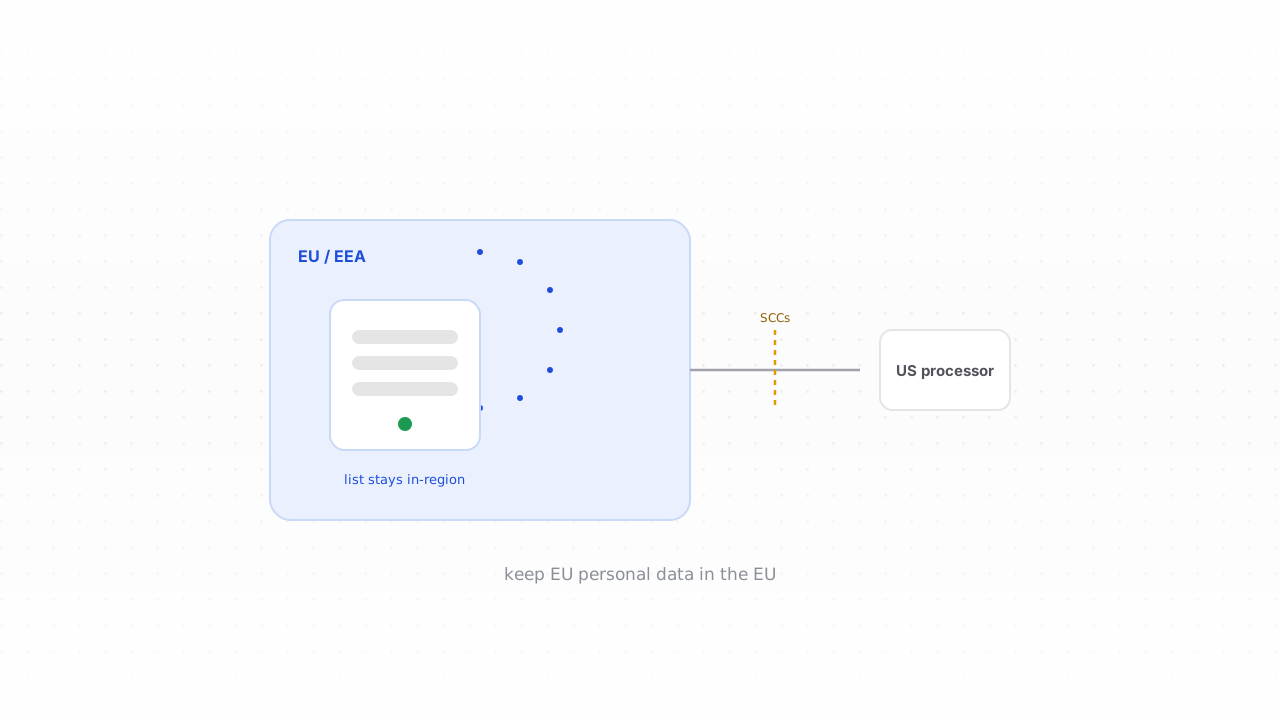
An email address can identify a person, so under the GDPR it is generally treated as personal data. When you send a list to a verification service, that service processes personal data for you — which is why controllers typically put a data processing agreement (DPA) in place with their processors. If the processor handles your data outside the EEA, that movement is an international transfer, and transfers of personal data out of the EEA generally need a valid transfer mechanism such as Standard Contractual Clauses (SCCs). Keeping the processing inside the EU or EEA sidesteps the transfer question entirely, which is the core reason EU senders look for a provider that processes locally. Qualisend processes verification data on EU infrastructure in Ireland, so a list uploaded from the EU stays in the EEA.
Is an email address personal data under GDPR?#
Usually, yes. The GDPR defines personal data broadly as information relating to
an identified or identifiable natural person. An email address like
firstname.lastname@company.com points fairly directly at an individual, and
even a less obvious address can become identifying when combined with other
data you hold. There are edge cases — a purely generic, role-based mailbox with
no link to a person is a weaker example — but the safe working assumption for a
marketing or sales list is that the addresses on it are personal data.
That matters because the moment something counts as personal data, the rest of the framework applies to it: there needs to be a lawful basis for processing it, people have rights over it, and anyone who touches it on your behalf becomes a processor in the chain. Verification doesn't change what the data is — it just adds another party that handles it. If you want the mechanics of what verification actually does to each address, the guide to how email verification works covers the pipeline; this article is about the data-protection layer sitting on top of it.
What happens when you upload a list to a US-based processor#
Picture the common case: you're an EU sender, you export a list, and you upload it to a verification tool whose servers are in the United States. In data-protection terms, a few things happen at once.
First, you're acting as the controller — you decide why and how the addresses get processed. The verification vendor is your processor, handling the data on your instructions. That relationship is the reason controllers generally sign a DPA with each processor: it's the contract that sets out what the processor may and may not do with the data.
Second, and this is the part that's easy to miss, the addresses physically leave the EEA. Your list travels from the EU to servers in the US, which is an international data transfer of personal data. Transfers to countries outside the EEA generally need a lawful transfer mechanism to be in place — the data can't simply move because it's convenient. So the same convenient upload quietly introduces a second compliance question (the transfer) on top of the first one (the processing).
None of this makes US-based verification inherently improper — plenty of transfers happen lawfully every day with the right safeguards. The point is that a US processor turns one question into two, and both of them are now part of your records and your risk assessment as the controller, not just the vendor's.
SCCs versus keeping processing in the EU#
There are established ways to move personal data outside the EEA lawfully. The most common is a set of Standard Contractual Clauses — pre-approved contract terms that both sides sign to commit to protecting the data. Depending on the destination and circumstances, organisations often pair SCCs with an assessment of the specific transfer and any extra technical measures. Where an adequacy decision exists for a destination country or framework, that can also support a transfer. These are real, workable routes, and many companies rely on them.
They also involve ongoing work: understanding the mechanism, documenting it, reviewing it as the legal landscape shifts, and being able to explain your reasoning if anyone asks. That's the trade-off — SCCs make a transfer possible, but they don't make the transfer question disappear.
Keeping the processing inside the EU or EEA does make it disappear. If your list is verified on infrastructure located in the EEA and the data never leaves, there is no international transfer to find a mechanism for, no SCCs to maintain for that leg, and no transfer assessment to keep current. You've removed a question rather than answered it. This is the angle behind data residency: for an EU sender, a processor that operates in the EU keeps the whole exercise on home ground.
| Consideration | US-based processing | EU/EEA processing |
|---|---|---|
| Data leaves the EEA? | Yes | No |
| International transfer to address? | Yes | None for this leg |
| Transfer mechanism (e.g. SCCs) needed? | Typically | Not for keeping data in-region |
| DPA with the processor? | Yes | Yes |
| Ongoing transfer review? | Ongoing | Not applicable to in-region processing |
Qualisend fits the right-hand column: verification data is processed on EU infrastructure in Ireland. A list uploaded from within the EU is handled inside the EEA, so the transfer column simply doesn't come into play. That isn't a promise that your overall programme is compliant — that always depends on your own setup — but it removes one of the more awkward moving parts for an EU sender.
A DPA checklist: questions to ask any verification vendor#
Rather than a list of obligations, think of this as due diligence — the questions worth putting to any verification provider before a list touches their servers. The answers tell you how much of the compliance picture the vendor has thought through, and how much lands back on you.
- Where is the data processed? Ask for the actual region of the servers that handle verification, not just where the company is headquartered. Data residency is the question that determines whether a transfer is even in play, so it's the one to lead with.
- Is there a data processing agreement? A processor handling personal data for you would typically offer a DPA that sets out the scope, purpose, and limits of what they do with your data. Ask how to get it and what it covers.
- Who are the sub-processors? Verification vendors often rely on other providers — hosting, infrastructure, analytics. Ask for the list, where those parties operate, and how you're told when it changes, because a sub-processor in another region can reintroduce a transfer you thought you'd avoided.
- What are the retention and deletion policies? Ask how long your uploaded list and its results are kept, whether you can delete jobs yourself, and what happens to the data when you close your account. Shorter, controllable retention means less data sitting around to account for.
- Is my data used to train or build anything? Ask plainly whether your uploaded addresses are used to improve models, build shared databases, or anything beyond returning your results. A clear "no" is worth having in writing.
For reference on how one provider answers these, Qualisend's privacy policy sets out that it is EU-based, processes uploaded lists to return results you can delete at any time, and does not sell or share the lists you submit — and DPA requests can go through the contact page. Whatever vendor you evaluate, having these answers on file is what lets you show your own reasoning later.
It's worth separating hygiene from data protection here, too. Verifying a list is good practice for deliverability and sender reputation regardless of jurisdiction — but the questions above are about how the vendor handles the personal data while doing that work, which is a distinct concern from how accurate the results are.
Where verification fits in a broader hygiene routine#
Data residency is one input; it doesn't replace the ordinary discipline of list hygiene. Verifying addresses before you send still does its usual job of catching dead mailboxes and typos, and it pairs naturally with the wider routine of cleaning an email list — collecting with permission, honouring unsubscribes and deletion requests, and not holding addresses longer than you need them. Choosing an EU processor handles the "where does the data go" question; the rest of good hygiene handles the "should we still be mailing this person at all" question. Both belong in the same routine, and neither substitutes for the other.
If you just want to try the mechanics without committing a list, the free email checker runs the local checks in your browser, and the free plan includes 100 credits for the full check — enough to run a real sample through EU-based processing and see the results before you decide.
Frequently asked questions#
Is an email address really personal data under GDPR?#
Generally, yes. The GDPR treats information relating to an identifiable person as personal data, and an email address will often identify someone directly or in combination with other information you hold. A purely generic role mailbox with no link to an individual is a weaker case, but for a typical marketing or sales list the working assumption is that the addresses are personal data and should be handled accordingly.
Does using a US email verification service break GDPR?#
Not by itself. Sending a list to a US-based processor is an international transfer of personal data, and such transfers generally need a valid mechanism such as Standard Contractual Clauses to be in place. Many organisations rely on those mechanisms perfectly well. The practical difference is that a US processor adds a transfer question you then have to document and maintain, whereas an EU-based processor keeps the data in-region and removes that question for that leg.
What does EU data residency mean for email verification?#
Data residency refers to the physical location where your data is processed and stored. For email verification, EU data residency means your uploaded list is handled on infrastructure inside the EU or EEA rather than being sent abroad. Because the data doesn't leave the EEA, there's no international transfer to find a lawful mechanism for. Qualisend processes verification data on EU infrastructure in Ireland, so a list uploaded from the EU stays in the EEA.
What should a data processing agreement with a verification vendor cover?#
Broadly, a DPA describes what the processor may do with your data and the limits around it — the purpose and scope of processing, where it happens, who the sub-processors are, how long data is retained and how it's deleted, and the security measures in place. Reading it against the checklist above (data residency, sub-processors, retention, and whether your data trains anything) is a practical way to see how much of the picture the vendor has covered. Your own DPO or counsel can tell you what a given agreement means for your situation.
For EU senders, the cleanest way to keep verification simple is to keep the data in the EU. Qualisend processes on EU infrastructure in Ireland — start with 100 free credits and verify a real sample without your list ever leaving the EEA.