

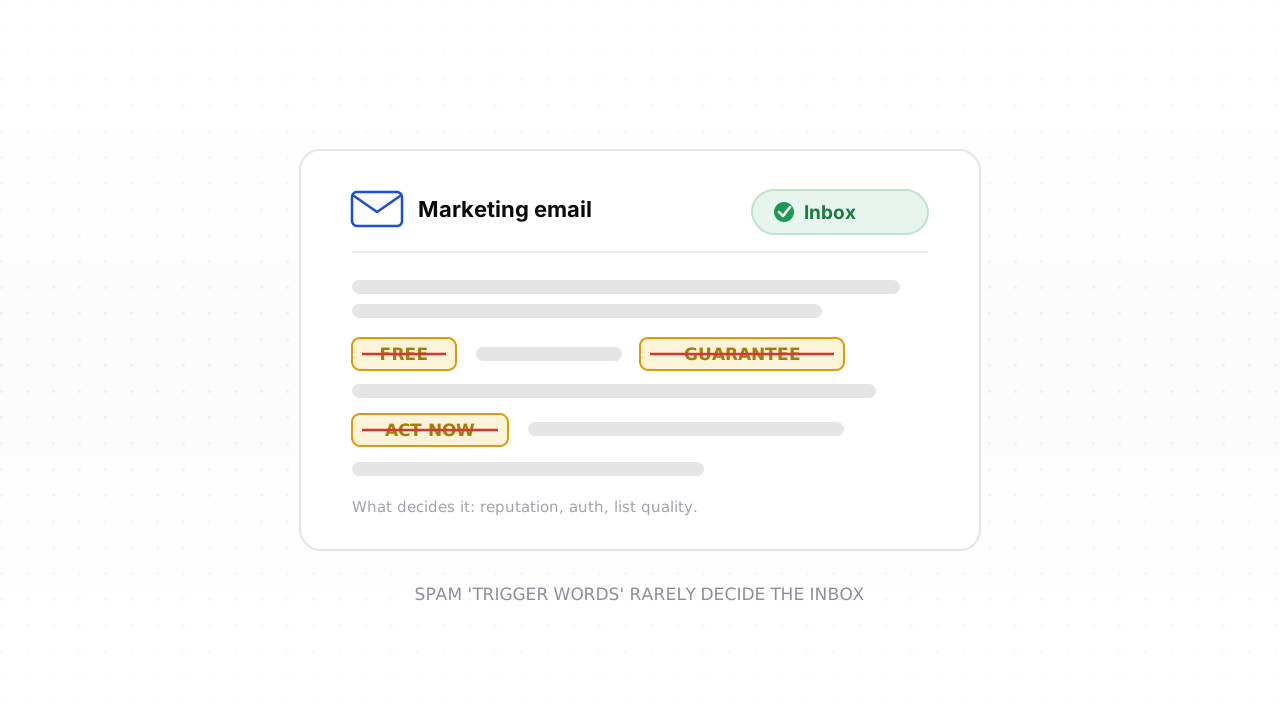
"Spam trigger words" is one of the most durable myths in email marketing. The idea is that a fixed list of forbidden words — "free", "guarantee", "act now" — will silently send your campaign to the junk folder, so if you scrub them out you'll reach the inbox. That was partly true fifteen years ago. It is largely false today, and treating it as gospel wastes effort you should be spending on the things that actually decide placement.
The short answer#
Modern spam filters weigh your sender reputation, authentication, recipient engagement, and list quality far more heavily than any individual word in your copy. There is no secret list of words that guarantees the spam folder, and no list you can avoid to guarantee the inbox. Content still matters, but as patterns — misleading subject lines, shouty formatting, image-only messages, risky links — not as a keyword blocklist. Fix reputation and list hygiene first; polish the wording second.
Where the myth comes from#
The "trigger words" idea is a fossil of how filters worked in the 2000s. Early spam filtering leaned heavily on Bayesian text analysis: the filter learned which words appeared often in spam versus legitimate mail, and scored each new message on its vocabulary. In that era, stuffing an email with "Viagra", "casino", or "100% FREE!!!" genuinely raised your spam score, because the word statistics were doing most of the work.
Filters have moved on. Mailbox providers like Gmail, Outlook, and Yahoo now run on machine-learning systems that consider hundreds of signals, and the strongest of those signals have nothing to do with the words in your body copy. They look at who is sending, whether the mail is authenticated, whether past recipients engaged or complained, and whether the sending domain has a history of clean behavior. Content is one input among many, and a weak one relative to the rest. The word-list advice survives mostly because it is easy to write down and easy to act on — not because it reflects how filtering works now.
What filters actually weigh#
If you want to know why a message landed in spam, the answer is almost never a word. It is one of these, roughly in order of impact.
Sender reputation. Providers keep a running reputation score for your domain and sending IPs, built from bounce rates, spam complaints, spam-trap hits, and engagement over time. A sender with a poor reputation lands in spam regardless of wording; a sender with a strong one gets the benefit of the doubt on borderline copy.
Authentication. SPF, DKIM, and DMARC prove the mail is really from you. Since Google and Yahoo's 2024 bulk-sender requirements, missing or broken authentication is one of the fastest routes to the spam folder — or to outright rejection — and no amount of careful word choice compensates for it.
Engagement. Whether recipients open, read, reply, and don't delete-unread is among the strongest signals a provider reads. Mail people want reaches the inbox; mail they ignore erodes your placement over time.
List quality. Mailing dead addresses generates hard bounces, and mailing scraped or purchased lists risks spam traps — both tell providers you don't know who is on your list. This is why verification and list hygiene do more for placement than any copy edit.
Complaints. When recipients hit "report spam", that goes straight into the provider's decision. Keeping complaints under the ~0.3% rate providers watch for matters far more than which adjectives you used.
What still matters in the content itself#
None of this means content is irrelevant. Filters do read the message, and some patterns can nudge a borderline email the wrong way — especially when your reputation is new or shaky and the filter has little else to go on. The important framing: these are patterns a filter may weigh alongside everything else, not guaranteed triggers. A reputable sender can use any of them and still reach the inbox; a struggling sender stacking several of them at once gives the filter more reasons to doubt.
| Pattern | Why a filter may weigh it | Sensible practice |
|---|---|---|
| Misleading subject lines | Subject that doesn't match the body, fake "Re:" or "Fwd:", false urgency — this correlates with deception and drives complaints. | Say what the email is actually about. Honest subjects also earn opens. |
| ALL CAPS and excessive punctuation | "FREE!!!" reads as shouting and pattern-matches to low-quality bulk mail. | Write in normal case. One exclamation mark is plenty. |
| Image-only emails | A message that is one big image with almost no text hides its content from the filter and looks evasive. | Keep a healthy text-to-image balance; never put critical content only in an image. |
| Risky links and shorteners | URL shorteners and links to domains with bad reputation are common in phishing and spam. | Link to your own domain; avoid public shorteners in bulk mail. |
| Mismatched From / Reply-To | A friendly "From" that doesn't align with the authenticated sending domain looks like spoofing. | Send from a real address on your authenticated domain and keep Reply-To consistent. |
| Sloppy or broken HTML | Malformed markup, hidden text, and tiny or invisible fonts are classic obfuscation tricks. | Use clean, tested HTML and don't hide text from the reader. |
Notice what these have in common: none is a single word. They are structural and behavioral signals — deception, evasion, and low effort — that filters have learned to associate with unwanted mail. A message can contain the word "free" in a perfectly honest sentence and be fine; a message that hides an all-image ad behind a fake "Re:" subject is a problem whatever words it uses.
Why chasing word lists is mostly wasted effort#
Search for "spam trigger words" and you'll find lists of several hundred terms. Auditing your copy against them feels productive, but it rarely moves placement, for a few reasons.
First, the lists are contradictory and unsourced. The same word appears as "deadly" on one list and "safe" on another, and almost none cite how a real 2020s filter actually scores it — because that scoring is proprietary, adaptive, and mostly not word-driven.
Second, ordinary commercial language overlaps heavily with these lists. If you sell anything, you legitimately use words like "offer", "discount", "free trial", and "subscribe". Contorting your writing to avoid them makes your copy worse and your open rates lower, which hurts engagement — the exact signal that does matter.
Third, it treats a symptom while ignoring the disease. Senders who worry about word lists are often the same senders with authentication gaps, aging lists, or rising complaint rates. The word audit gives a false sense of progress while the real problems keep pushing mail to spam. This is doubly true for cold outreach, where the deliverability verdict is decided by list quality, domain reputation, and warmup long before any recipient reads a single word of the copy.
A sensible content checklist#
Content is worth a few minutes — just not hours of keyword scrubbing. Once reputation, authentication, and list hygiene are handled, run copy through a short, honest checklist:
- The subject describes the email. No bait, no fake "Re:", no manufactured urgency you can't back up.
- Formatting reads like a human wrote it. Normal capitalization, restrained punctuation, no walls of colored bold text.
- There's real text, not just an image. The filter — and readers with images off — can see what the message says.
- Links point to your own reputable domain. No public shorteners, no linking to domains you don't control.
- From, Reply-To, and the authenticated domain align. Nothing looks spoofed.
- There's a working, one-click unsubscribe. Easy opt-out prevents the "report spam" clicks that actually damage placement.
Do that and you've handled everything in the copy that a modern filter plausibly cares about. The rest of your placement is decided upstream, before the message is even written.
Frequently asked questions#
Do spam trigger words still send emails to spam?#
Not on their own. A single word like "free" or "guarantee" will not send a message from a reputable, authenticated sender to the spam folder. Modern filters weigh sender reputation, authentication, engagement, and list quality far more than vocabulary. Words can be one small input when your reputation is weak and the message stacks several risky patterns at once, but they are never the main event.
Is there an accurate list of spam words to avoid?#
No — and be skeptical of any list that claims to be definitive. The word lists circulating online are contradictory, unsourced, and based on how filtering worked over a decade ago. Real mailbox-provider scoring is proprietary, adaptive, and mostly driven by non-content signals. Focus on avoiding deceptive patterns (misleading subjects, image-only emails, risky links) rather than memorizing specific words.
What actually causes emails to go to spam?#
Almost always one of four things: broken or missing authentication, a poor sender reputation from past bounces and complaints, a dirty list generating hard bounces and spam-trap hits, or low engagement. Content problems are a distant fifth, and even then it's structural patterns rather than individual words. The full breakdown is in the guide on why emails go to spam.
Should I still care about my email copy at all?#
Yes, but in proportion. Honest subject lines, clean formatting, a real text-to-image balance, and safe links are worth a quick check because they affect both filters and readers. What isn't worth your time is scrubbing copy against a 300-word blocklist while ignoring reputation, authentication, and list hygiene — the levers that actually decide whether you reach the inbox.
If your mail is landing in spam, the fix is almost never a word — it's the list, the authentication, or the reputation behind it. Clean your list with the free email checker to remove the dead addresses that drive bounces and complaints, then work through the deliverability guide for the rest.