

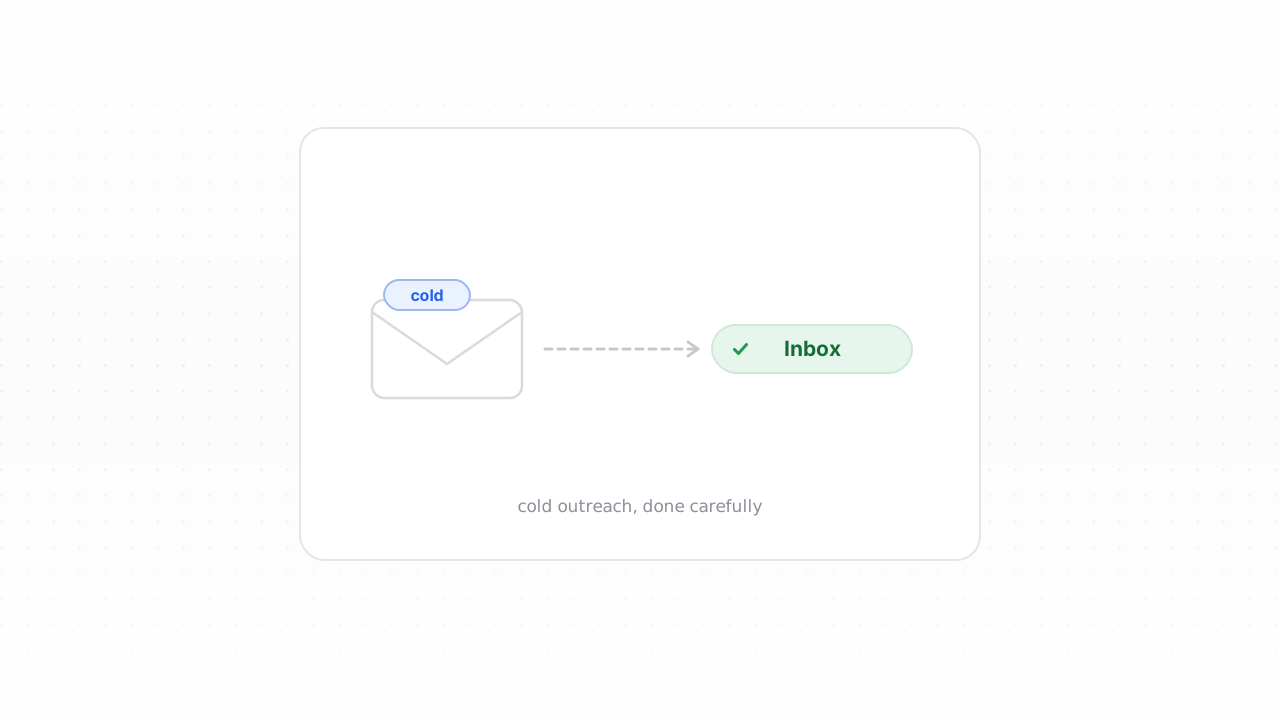
Cold email is deliverability on hard mode. You're mailing people who've never engaged with you, from lists that are dirtier than any opt-in list, to recipients quick to hit "report spam". Most cold campaigns fail on deliverability long before anyone judges the copy — the messages simply never reach the inbox. Here's how to give them a chance, in the order that matters.
The short answer#
Verify the list first, send from a separate domain, authenticate it, warm it up, keep volume low and personalized, handle catch-alls carefully, and comply with the law. Verification leads because cold lists — scraped, bought, or tool-built — carry the highest rates of dead addresses and spam traps of any list you'll send to, and a single trap hit or a wave of hard bounces can blocklist a cold domain on day one.
Why cold email is hard#
Two things work against you from the start. First, there's no engagement history, so mailbox providers have no positive signal to weigh — a brand-new sender mailing strangers looks, statistically, a lot like a spammer. Second, cold lists are built from scraping, buying, or automated tools, which means they're full of invalid addresses, catch-all domains, and spam traps. Add recipients who never asked to hear from you and are quick to complain, and the deliverability deck is stacked against you.
Verify the list first#
This is the single highest-leverage step for cold email, because cold lists are the dirtiest lists there are. Run the whole list through verification before you send anything:
- Remove the undeliverables. Cold lists run high on dead addresses; each one is a hard bounce that damages a domain with no reputation to absorb it.
- Segment the catch-alls. A big share of B2B cold addresses sit on catch-all domains — unconfirmable, so send to them separately and carefully rather than blasting them.
- Cut the spam-trap risk. Verification can't detect a live spam trap, but it strips out the invalid and typo-domain addresses that correlate with trap-heavy sources — and the discipline of verifying is itself a reason not to mail a list you can't stand behind.
Skipping this step is the most common way cold campaigns die. A verified cold list still faces an uphill battle; an unverified one usually doesn't survive the first send.
Protect your main domain#
Never send cold email from your primary domain. If a cold campaign goes wrong — and cold campaigns go wrong more than opt-in ones — you don't want the fallout landing on the domain your customers, invoices, and transactional mail depend on. Use a separate sending domain (often a close variant) dedicated to cold outreach, and set up SPF, DKIM, and DMARC on it so it authenticates cleanly.
Warm up and keep volume low#
A fresh cold domain has no reputation, so warm it up before scaling. For cold in particular, keep the daily volume low and the messages personalized — a small number of genuinely tailored emails reads very differently to a spam filter than thousands of identical ones. Ramp gradually, watch your bounce and complaint rates, and pull back the moment either climbs.
Handle catch-alls and unknowns deliberately#
Because cold B2B lists skew heavily toward corporate catch-all domains and greylisting gateways, you'll have a meaningful slice of addresses that verification can't fully confirm. Don't treat them like confirmed ones: keep catch-alls and unknowns in their own throttled segment, send in small batches, and read the bounce feedback before widening.
Stay on the right side of the law#
Cold email is regulated, and the rules differ by region. In the US, CAN-SPAM
permits unsolicited commercial email but requires a working unsubscribe, a valid
physical address, and honest headers and subject lines. In the EU, GDPR is
stricter and generally requires a lawful basis such as legitimate interest, with
tighter limits on emailing individuals. Wherever you send, honor unsubscribes
immediately and don't mail people who've asked you to stop — beyond the legal
risk, complaints are exactly what sink cold deliverability. This is general information, not legal advice — confirm the rules for your jurisdiction.
Frequently asked questions#
How do I keep cold email out of spam?#
Verify the list first, send from a separate authenticated domain, warm it up, and keep volume low and personalized. Cold email lands in spam mainly because of dirty lists (hard bounces and spam-trap hits) and no sending reputation — verification fixes the first and warmup addresses the second. There's no trick that overcomes a dead list or a cold domain sending at full volume.
Should I verify a cold email list before sending?#
Yes — it's the most important step. Cold lists are built by scraping, buying, or automated tools and carry far more invalid addresses and spam-trap risk than an opt-in list. Sending to them unverified generates the hard bounces and trap hits that blocklist a cold domain almost immediately. Verify and segment before the first send.
Should I use a separate domain for cold email?#
Yes. A cold campaign gone wrong can damage a domain's reputation badly, and you don't want that landing on the primary domain your customers and transactional mail rely on. Use a dedicated sending domain for cold outreach, authenticate it, and warm it up separately.
How many cold emails can I send per day?#
Fewer than you think, especially at first. A new cold domain must be warmed up gradually, and cold email works best as low-volume, personalized outreach rather than high-volume blasting — which reads as spam regardless of warmup. Let your bounce and complaint rates set the pace: increase only while they stay low.
The one step that decides most cold campaigns is the one senders skip — verifying the list before the first send. The free plan runs the full verification pipeline so you can strip the dead addresses and segment the catch-alls, and the deliverability guide covers the rest of the levers that earn the inbox.