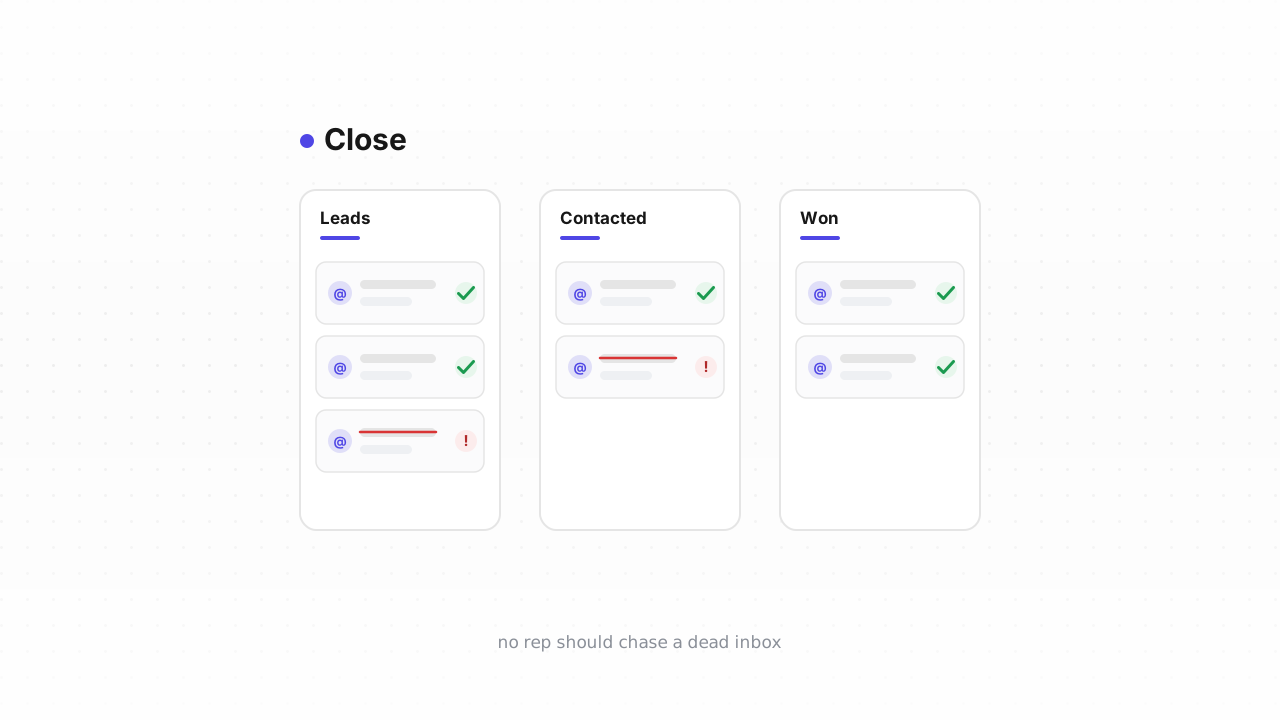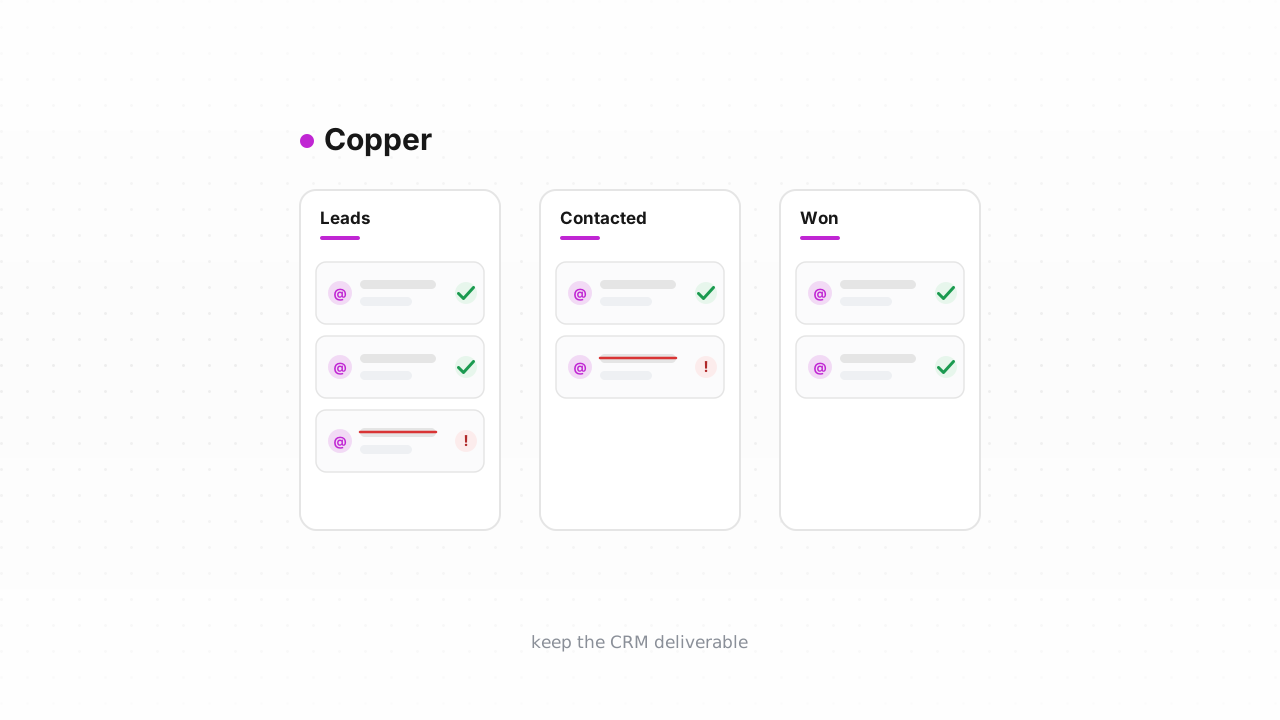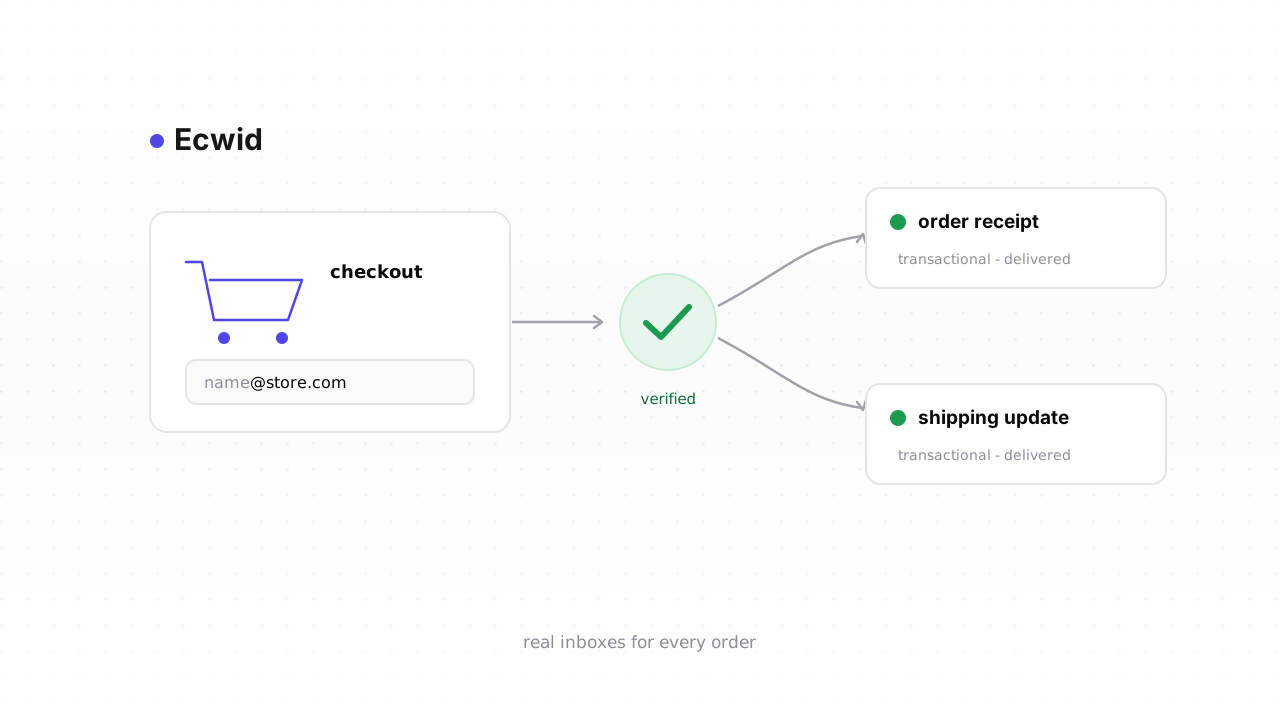


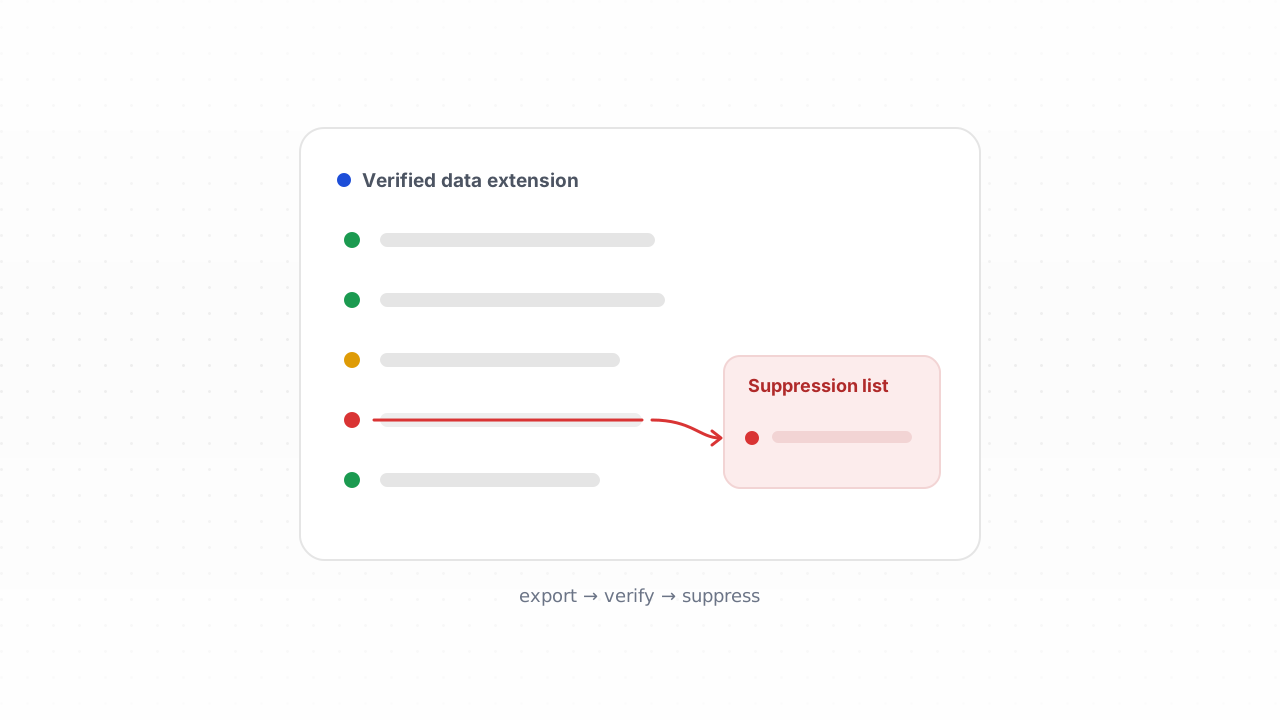
On most Salesforce Marketing Cloud contracts, cleaning your list won't lower this month's invoice — you pay for contacts and super messages under an annual agreement, not a headcount that drops the moment you archive a row. That makes SFMC hygiene a different job than it is on a self-serve ESP: the return is protecting your metered send volume and your dedicated IP's reputation, not trimming a bill. So the mechanism that matters here isn't a delete button — it's a suppression data extension you apply as a send exclusion.
The platform already handles part of the work. Once an address bounces enough times, SFMC moves its subscriber status to Held and quietly stops sending to it — dependable, automatic hygiene for anything you have already mailed. The blind spot is everything it hasn't: the data-extension imports, old CRM records, and typos that sit in your account looking mailable until a first send proves them wrong. This guide covers what Held does for you, the addresses it can't see, and the export → verify → suppress loop that retires the dead ones before your next send.
What Salesforce Marketing Cloud already does for you#
SFMC's native hygiene runs on subscriber status and account-level bounce management, tracked against your All Subscribers list:
- Hard bounces are held. When an address hard-bounces, SFMC records the bounce and moves the subscriber toward a Held status, after which it is skipped on future sends. Held is applied at the account level, so it carries across the sends that touch that subscriber.
- Repeated soft bounces escalate. An address that soft-bounces across a number of consecutive sends is eventually treated like a hard bounce and held, rather than being retried forever.
- Held is a status, not a deletion. A held or bounced subscriber stays in your data extensions and your All Subscribers list — SFMC simply stops sending to it. The address still occupies a live row in every data extension that holds it, and still counts against the contact totals your contract is sized on.
Salesforce Marketing Cloud behavior above reflects its documented bounce management and subscriber statuses, last checked July 2026.
Credit where due: for addresses SFMC has actually mailed, this is reliable, automatic hygiene. The gap is everything it hasn't mailed yet — and at SFMC's scale, that gap is measured in sender reputation and metered send volume, not just a single bounce.
What Salesforce Marketing Cloud can't catch#
Every mechanism above is reactive: it needs a send and a bounce to fire. That leaves the blind spot every ESP shares, only amplified because SFMC senders often run on dedicated IPs where first impressions are permanent:
- Never-mailed invalid addresses. Records imported into a data extension from your CRM, another platform, or a purchased lead list have never bounced because they have never been sent to. SFMC has no signal on them until your first send — which is exactly when a mailbox provider forms its first impression of your IP. Recycled spam traps hide in precisely this kind of never-mailed import.
- Disposable addresses accepted at signup that will quietly stop existing.
- Role addresses (
info@,support@) that skew engagement-based journeys and decisioning. - Decayed addresses that look healthy today and will bounce next month.
A data-extension import is the sharpest case: it arrives with its bounce history stripped, so addresses that were already failing on the old platform look brand new in Marketing Cloud — and each one is a live row your next send will hit. Verify before the import, not after the first send.
Clean a Salesforce Marketing Cloud list: export, verify, act#
A native Salesforce Marketing Cloud connector is coming soon — it's being rebuilt and on the way. Today the supported path is the CSV loop and the API — the same flow as the Mailchimp and HubSpot guides, adapted to SFMC's data-extension model:
- Export from Marketing Cloud. Pull the data extension (or the segment) you want to clean out to a CSV — through a data extract in Automation Studio, or the export tools in your account's contacts and email area — making sure the email address column is included.
- Verify the file. Upload it to Qualisend bulk cleaning — up to 1,000,000 addresses, duplicates charged once — or paste addresses directly. The free plan's 100 credits cover a first sample.
- Read the results. Every address returns
deliverable,risky,undeliverable, orunknownwith a reason code and sub-flags (catch-all, disposable, role, full mailbox), plus the MX provider and probe detail as evidence. Download the cleaned CSV. - Build a suppression data extension. Filter your results to
undeliverable(and the disposables you don't want to keep), then import those addresses into a dedicated suppression data extension. Apply it as an exclusion on your sends — SFMC lets you exclude a suppression list at send time, and you can keep the data extension current with a SQL Query Activity in Automation Studio so it refreshes on a schedule. This retires the dead addresses without deleting the source records. - Handle everything else per verdict — the table below.
What to do with each verdict#
| Verdict | Salesforce Marketing Cloud action |
|---|---|
deliverable | Keep sending as normal. |
deliverable + role flag | Keep for transactional and account mail; exclude from engagement-scored journeys — see role, disposable & free. |
risky + catch-all flag | Move to a dedicated data extension and throttle rather than blasting. |
risky + disposable flag | Add to the suppression data extension. The inbox was built to expire. |
unknown | Keep active and re-verify next clean — usually a temporary block like greylisting or rate-limiting, not a verdict on the mailbox. |
undeliverable | Add to the suppression data extension. Don't wait for the bounce to prove it. |
Suppression lists, super messages, and reputation at scale#
This is the SFMC-specific lever, and it is worth understanding because cleaning pays off differently here than on a self-serve, monthly-billed ESP. Marketing Cloud is an enterprise platform: on most contracts you pay for contacts and super messages under an annual agreement, not a headcount that drops the moment you archive a row. So unlike Mailchimp or HubSpot, cleaning your list won't shrink this month's invoice.
What it protects instead is more valuable at scale:
- Metered send volume. Every send to a dead address burns super message allowance you have already paid for and pushes you toward your contract's volume ceiling. Never-mailed invalids are the biggest source of that waste.
- Contact totals. Each junk record is a live row across the data extensions that reference it, quietly inflating the contact counts your renewal is sized on.
- Sender reputation. This is the one that matters most. Sending to never-mailed invalids and recycled traps on a dedicated IP is exactly what erodes your reputation and drives up your bounce rate. A clean list is only half of it, though: even flawless hygiene lands in spam if you don't authenticate your Salesforce Marketing Cloud sending domain with SPF, DKIM, and DMARC, the checks Gmail and Yahoo now require at the door. Reputation is far more expensive to rebuild than a list is to verify.
A maintained suppression data extension is the durable mechanism for all three. Because it is a data extension rather than a delete, a known-bad address stays excluded across every send you run, and the source records survive — so a future import can't silently re-add an address you already retired, and you keep an audit trail, which matters in an enterprise or compliance context.
How often to re-clean#
There is no universal number, and we won't invent a decay statistic. The real drivers are how fast your audience grows and how it is sourced: a double-opt-in list decays slowly, while one fed by CRM syncs and lead lists accumulates junk continuously. Three habits cover most senders:
- Before any high-stakes send — a launch, a renewal push, or a seasonal campaign on a dedicated IP.
- After any import, before the first send touches the new data extension.
- On a regular cycle sized to your volume, with your per-send bounce rate as the tripwire between cleans. If bounces climb toward the warning thresholds, clean now (see why bounce rate matters).
Frequently asked questions#
Does cleaning my list lower my Salesforce Marketing Cloud bill?#
Usually not directly. SFMC is billed on contacts and super messages under a contract, not a self-serve monthly count that drops the moment you suppress a row, so cleaning won't shrink this month's invoice the way it does on Mailchimp or HubSpot. What it does do is stop you spending metered super messages on dead addresses and keep junk records from inflating the contact totals your renewal is sized on — and, more importantly, it protects the sender reputation that dead addresses quietly destroy.
Should I delete bad contacts or build a suppression list?#
Build a suppression data extension and apply it as a send exclusion. It stops sends across every send you run and keeps the source record, which preserves your audit trail and stops a future import from silently re-adding a known-bad address. Deleting rows loses that safety net, so reserve it for genuine junk you never want to see again.
Can I verify addresses before they enter Marketing Cloud?#
Yes, and it is the highest-leverage option: verifying at capture through the API keeps typos and disposable addresses out of your data extensions entirely, so they never reach a send or a billable contact row. A native Salesforce Marketing Cloud connector is coming soon; until it ships, the CSV loop above is the supported path.
What is the Held status in Salesforce Marketing Cloud?#
Held is the subscriber status SFMC assigns after an address bounces repeatedly; a held subscriber is skipped on future sends. It is reactive — it needs real bounces to trigger — and account-level, so it protects you from addresses you've already mailed. It won't flag a never-mailed invalid sitting in a fresh import, which is why verifying before you send still matters.
Clean your export before it becomes a send: run a file through Qualisend bulk verification, or try a single address free at the email checker to see the deliverable, risky, and undeliverable verdicts before you build your suppression data extension.