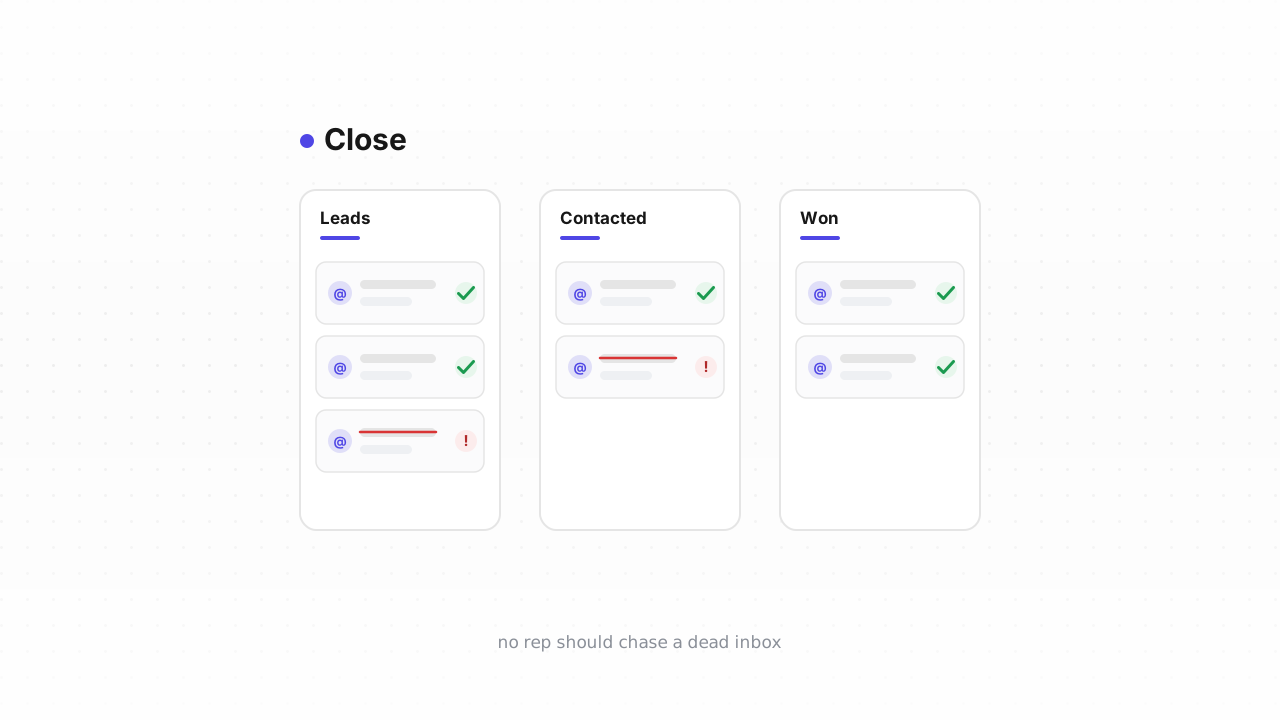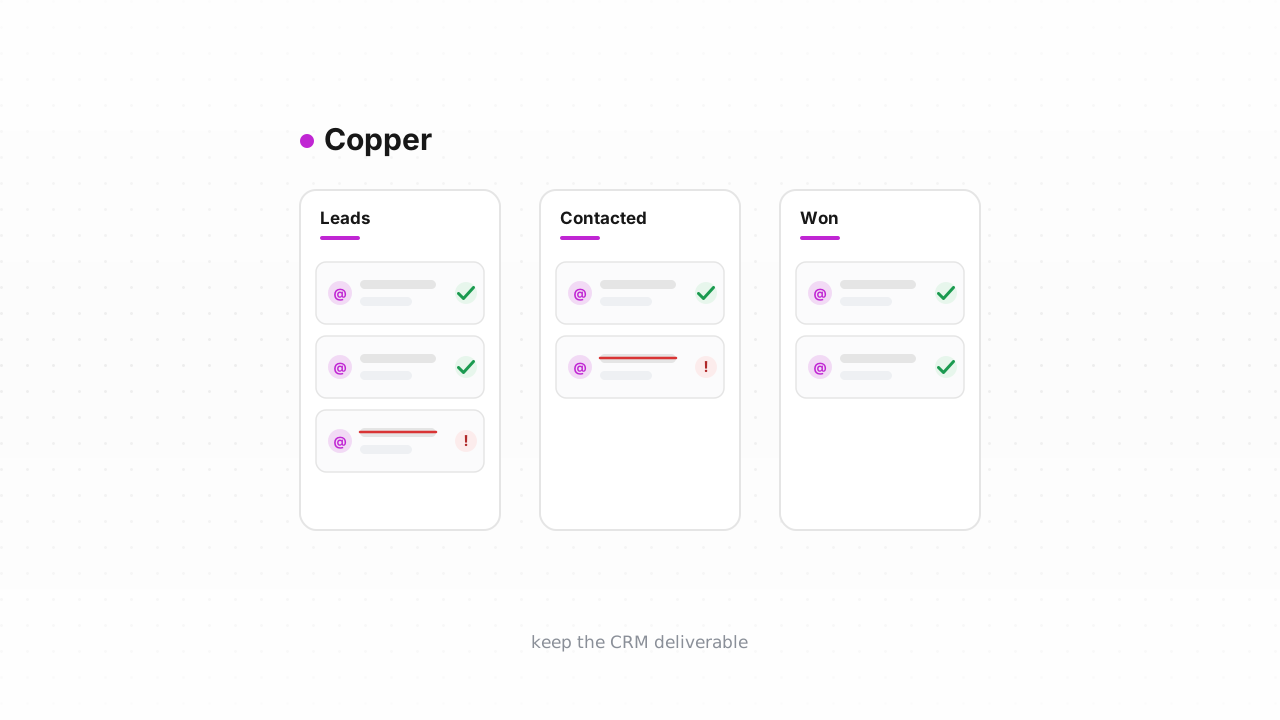


Cleaning a Marketo list comes down to two off-switches for a bad lead, and
knowing which one to pull is most of the job. Email Invalid is the flag Marketo sets itself
when an address hard-bounces; Marketing Suspended is the one you set by hand
to bench a lead without losing it. Both stop marketing sends — but because
Email Invalid is an ordinary, queryable field, you can build a smart list
that pulls every flagged lead in one pass, then decide, segment by segment,
whether each cohort should be suspended, deleted, or re-verified.
Neither status touches the thing that quietly runs up your Marketo bill:
database size. Most Marketo Engage agreements are priced on how many records you
hold, and a suspended lead — or an Email Invalid one — still occupies a
record, so it still counts at renewal. The flag also only ever fires after a
send bounces, which leaves every never-mailed import invisible until your first
campaign. This guide uses Marketo's own smart lists to segment your database,
then pairs them with a verified export so you can suspend, delete, or keep each
lead on evidence — before the next send, and before renewal counts the dead
ones.
What Marketo already does for you#
Marketo's native hygiene centers on one field: Email Invalid.
- Hard bounces flip a flag. When a lead hard-bounces, Marketo sets that
person's
Email Invalidfield to true and records anEmail Invalid Cause. From then on it won't send marketing email to that address, so you stop hammering a mailbox that has already failed. - The flag is queryable. Because
Email Invalidis an ordinary field, you can build a smart list that returns every invalid lead in the database — the raw material for a cleanup pass. - Suspending is separate from deleting. Marketo also has a
Marketing Suspendedfield that stops marketing sends to a lead without removing the record. It's the polite way to bench an address you don't want to email but don't want to lose. - Invalid isn't gone. A flagged lead still lives in your database. It still occupies a record — and, because most Marketo agreements are sized on database volume, it still counts.
Marketo behavior above last verified against Adobe's Marketo Engage documentation, July 2026.
Credit where due: for addresses Marketo has actually mailed, this is real, automatic hygiene. The gap is everything it hasn't mailed yet — and in a database-priced system that gap shows up at renewal as well as in your bounce rate.
What Marketo can't catch#
Every mechanism above is reactive: it needs a send and a bounce to fire. That leaves the blind spot every platform shares:
- Never-mailed invalid addresses. Leads imported from a list buy, an event badge scanner, or another automation platform — plus old form fills and typos captured at signup — have never bounced because they've never been sent to. Marketo has no signal on them until your first campaign, which is precisely when a mailbox provider forms its first impression of your sender reputation. That first impression rests on authentication as much as list quality, so authenticate your Marketo sending domain with SPF, DKIM, and DMARC before that campaign goes out.
- Disposable addresses dropped into a gated-content form that will quietly stop existing.
- Role addresses (
info@,sales@) that skew engagement scoring and behavioral triggers — see role, disposable & free. - Decayed leads — the B2B special. People change jobs, and a
first.last@company.comthat converted last year becomes a hard bounce the day they leave. It looks perfectly healthy in Marketo today.
An imported list is the sharpest case: it arrives with its bounce history stripped, so addresses that were already failing on the old platform look brand new in Marketo — and each one lands in the database you're billed on. Verify before the import, not after the first send.
How to clean a Marketo email list: export, verify, act#
The native Marketo connector is now live: connect it to clean your list in place — verify every lead and write results back, with real-time checks on new contacts. Prefer to work by hand? The CSV loop below works on any plan — the same flow as the Mailchimp and HubSpot guides, in Marketo's terms:
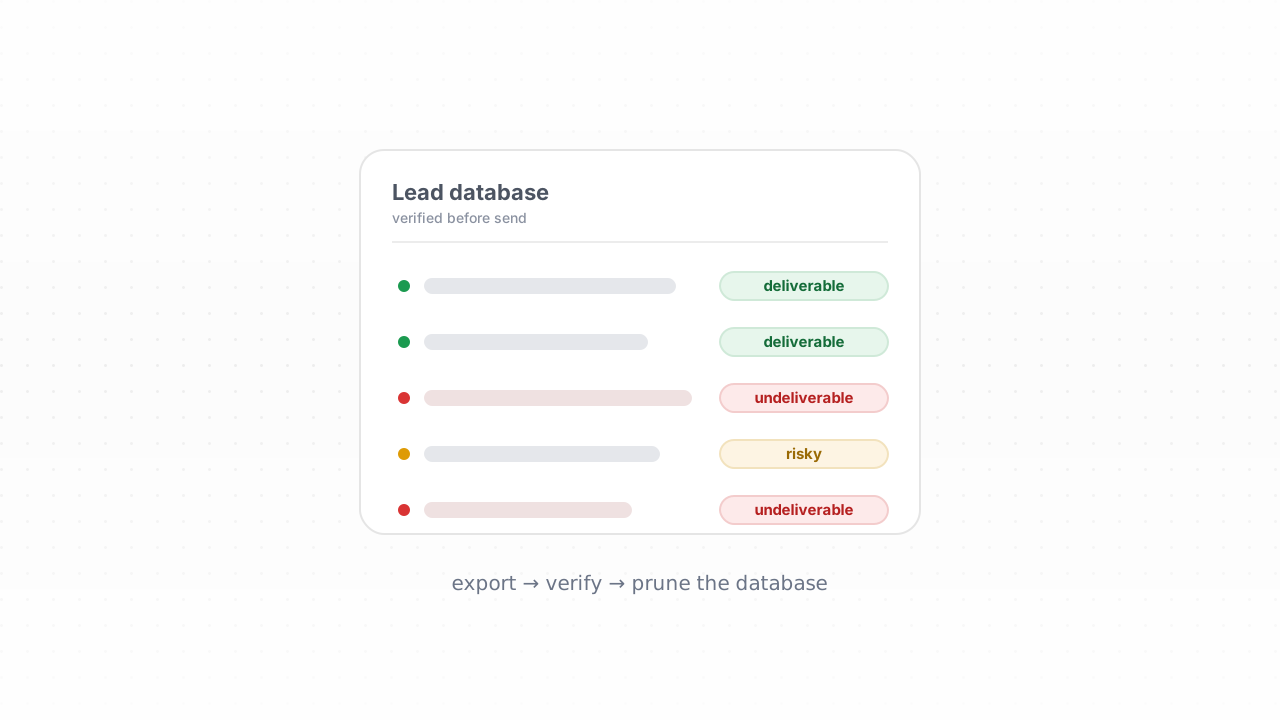
- Build a smart list and export. In your Lead Database, create a smart
list for the segment you want to clean — everyone, a single acquisition
source, or a program's members — and export the view to CSV with the email
column. For a maintenance pass, a smart list that excludes leads already
flagged
Email Invalidkeeps the file down to just the unknowns. - Verify the file. Upload it to Qualisend bulk verification — up to 1,000,000 addresses, duplicates charged once — or paste addresses directly. The free plan's 100 credits cover a first sample.
- Read the results. Every address returns
deliverable,risky,undeliverable, orunknownwith a reason code, a 0–100 score, and sub-flags (catch-all, disposable, role, full mailbox), plus the MX provider and probe detail as evidence. Download the cleaned CSV. - Mark the bad leads in Marketo. Re-import the cleaned file to populate a
custom field (say,
Verification Status), or match on email to setMarketing Suspendedon the undeliverables. Suspending stops every marketing send immediately; deleting goes further and takes the record off your database count — the suppress-or-delete call is the next section. - Handle everything else per verdict — the table below.
What to do with each verdict#
| Verdict | Marketo action |
|---|---|
deliverable | Keep mailing as normal. |
deliverable + role flag | Keep for account and transactional touches; exclude from engagement-scored programs — see role, disposable & free. |
risky + catch-all flag | Move to its own smart list and throttle. A catch-all domain accepts everything at the door, so a single send proves little. |
risky + disposable flag | Suspend. The inbox was built to expire. |
unknown | Keep active and re-verify next clean — usually greylisting or rate-limiting, not a verdict on the mailbox. |
undeliverable | Suspend or delete. Don't wait for the bounce to set
Email Invalid for you. |
Suppress or delete? The database-size math#
This is the Marketo-specific lever, and it behaves differently from the archive
button in a send-based tool. Because most Marketo contracts are priced on
database size, a suspended lead and a deleted lead are not the same on the
invoice: Marketing Suspended stops the sends, but the record still occupies
your database, so it still counts toward the volume you pay for. Only removing
the record actually shrinks that number.
That gives you a clean decision rule:
- Suspend when you want to keep the lead's history — activity log, program membership, sales notes — and the deliverability win is enough on its own. Good for role addresses, catch-alls, and anything sales might still reference.
- Delete the genuinely dead, never-again-useful records — hard
undeliverableverdicts and expired disposables — after you've saved the verified CSV as your archive. This is what moves the needle on a database-size plan and can keep you under a tier as your lead flow grows. Check where you sit on pricing before a renewal.
Note that Marketo's automatic Email Invalid flag, by itself, does not shrink
your database — the flagged lead stays put and stays billable until you suspend
or delete it. That's exactly why an export-and-verify pass pays for itself
twice: once in deliverability, once at renewal.
How often to clean a Marketo database#
There's no universal number, and we won't invent a decay statistic. The real drivers are how fast your database grows and how it's sourced: a double-opt-in list decays slowly, while one fed by imports, list buys, and event scans accumulates junk continuously. Three habits cover most B2B senders:
- Before any high-stakes send — a webinar push, a launch, an ABM burst.
- After any import or list purchase, before the first send touches it — and before those records settle into your billable database.
- On a regular cycle sized to your volume, with your per-send bounce rate as the tripwire between cleans. If bounces climb toward the warning thresholds, clean now (see why bounce rate matters). For a platform-agnostic cadence, see how often to clean an email list.
Frequently asked questions#
Does cleaning my list lower my Marketo bill?#
It can, but only if you delete. Most Marketo agreements are priced on database
size, and both a Marketing Suspended lead and an Email Invalid lead still
occupy a record — so they still count. Verifying and then deleting the
genuinely undeliverable and expired-disposable leads (after saving the cleaned
CSV) is what actually reduces the number you're billed on. Cleaning a list
before you import keeps that junk out of the count from the start.
Should I suspend or delete an invalid lead?#
Suspend when you want to keep the record's history and just stop the sends — role addresses, catch-alls, leads sales still references. Delete the genuinely dead records you'll never use again, since on a database-size plan only deleting removes them from the count. Export the verified CSV first so you keep proof the address was bad and won't silently re-import it later.
Can I verify leads before they enter Marketo?#
Yes, and it's the highest-leverage option: verifying at capture through the API keeps typos and disposable addresses out of Marketo entirely, so they never become billable records or first-send bounces. The native Marketo connector is now live, so you can also clean your list in place and check new contacts in real time; the CSV loop above remains a valid manual alternative on any plan. For the wider routine, see how to clean an email list.
Will Marketo catch a lead that has gone bad since I imported it?#
Not until it bounces. Marketo only sets Email Invalid after a send fails, so
a contact who changed jobs since import looks healthy right up to the campaign
that bounces — and that bounce is already counted against your reputation.
Periodic verification is how you catch decay before the send instead of after.
Want to clean your Marketo database before it costs you a tier? Paste a single address into the free email checker to see a live verdict, or upload your full Marketo export for a bulk clean and size it on pricing — then delete the dead records before your next renewal counts them.