

Your email bounce rate is the share of a campaign that never reaches a mailbox because the receiving server rejected it. It looks like a delivery statistic, but mailbox providers read it as a reputation signal: a sender who keeps mailing addresses that don't exist looks careless, and careless senders get filtered. Enough bounces and Gmail, Outlook, and Yahoo start routing your mail to spam for everyone on your list — including the engaged subscribers who were never the problem. That is why bounce rate, more than opens or clicks, is the number worth protecting first.
Hard bounces vs soft bounces#
Not every bounce carries the same weight. The receiving server returns an SMTP status code, and the first digit tells you whether the failure is permanent or temporary — the difference between a reputation problem and a retry.
| Type | SMTP code | What it means | Reputation impact |
|---|---|---|---|
| Hard bounce | 5xx (permanent) | The mailbox or domain doesn't exist, or the server permanently refuses it. | High — this is the number providers watch. |
| Soft bounce | 4xx (temporary) | Mailbox full, server down, message too large, or greylisting. | Low at first — but repeated soft bounces are treated as hard. |
Hard bounces are the ones that hurt. A 550 No such user says the address was
never real (or is long dead), and a good ESP will suppress it after a single
occurrence. Soft bounces are retried for a day or two; if an address keeps
soft-bouncing across sends, most platforms escalate it to a hard bounce and stop
trying. If you want the codes behind the categories, the
SMTP response codes guide breaks them down, and
bounce classification covers how ESPs sort
them.
Why providers care so much about it#
A mailbox provider's job is to protect its users from junk, and it has to decide in milliseconds whether your mail belongs in the inbox. It can't read your content the way a human would, so it leans on behavioral signals — and a stream of messages aimed at nonexistent addresses is one of the loudest. Legitimate senders mail people who asked to hear from them; those addresses are real. Spammers blast purchased and scraped lists riddled with dead addresses and spam traps. A high hard-bounce rate makes your sending pattern look like the second group.
The consequence is collective, which is what makes it dangerous. Reputation attaches to your domain (and sending IP), not to individual messages. Once providers lower that reputation, the penalty applies to every message from the domain — the transactional receipts and the campaign your best customers actually open. One dirty import can pull down the inbox placement of mail that had nothing to do with it. That is the real cost of bounces, and it's why sender reputation is the asset a bounce rate quietly spends.
The thresholds that matter#
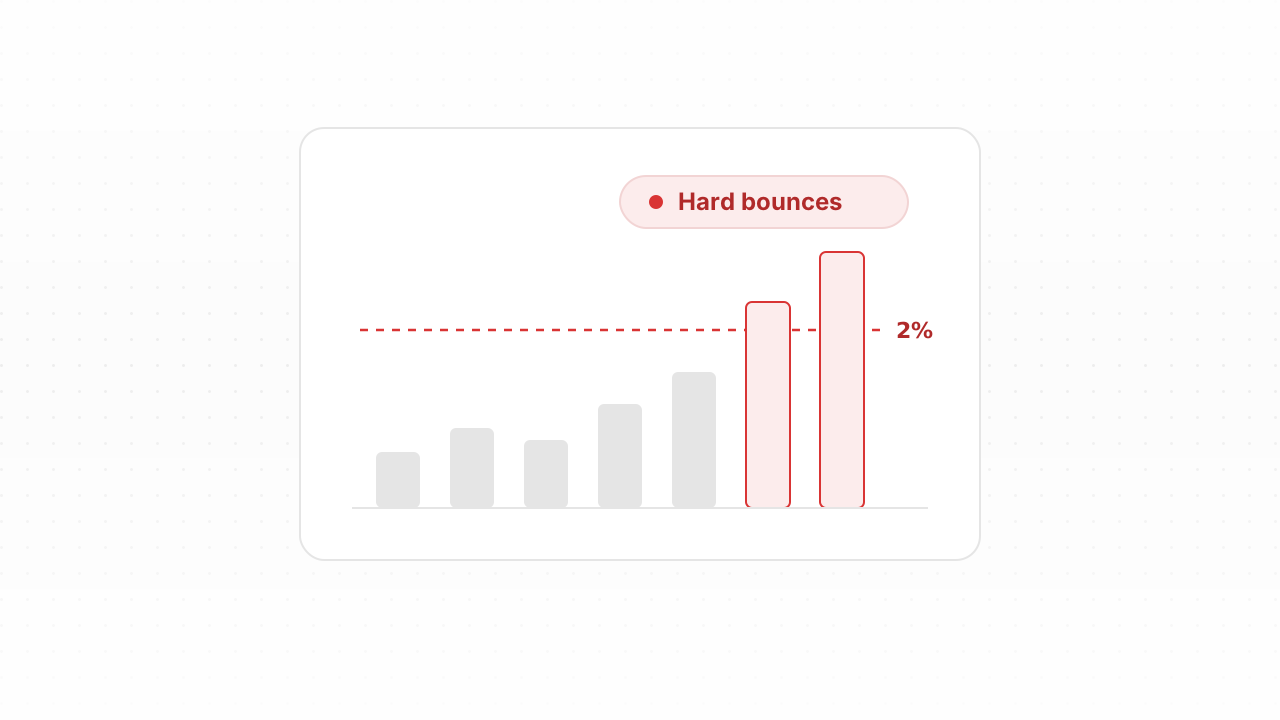
The exact numbers vary by provider and ESP, and most are deliberately unpublished so they can't be gamed. But the industry consensus is consistent enough to plan around:
- Under ~2% — normal. Keep it here and bounces are a non-issue.
- ~2% — a warning line. Several ESPs surface alerts and start watching.
- ~5% and above — grounds for throttling, a sending pause, or account suspension at many providers.
The safe posture is simpler than chasing a number: keep hard bounces as close to zero as you can, and never let a single send spike the rate. For where your rate should sit by industry and how it compares, see the bounce rate benchmarks.
Where bounces actually come from#
Bounces rarely appear out of nowhere. Four sources account for most of them:
- List decay. People change jobs and abandon addresses constantly; a corporate address can die the day someone leaves. Even a list that was clean a year ago decays if you never re-verify it — which is why how often you clean matters as much as whether you do.
- Typos at signup.
gmial.com,yahooo.com, a fat-fingered local part — every one is a guaranteed hard bounce you could have caught at the form. - Purchased or scraped lists. These arrive pre-loaded with dead addresses and spam traps by design. There is no safe way to mail them.
- Imported lists with amputated history. An import from another platform strips the bounce history, so addresses that were already failing elsewhere look brand new — until your first send discovers them the hard way.
Role addresses (info@, support@) and catch-all domains add a subtler wrinkle:
they may not bounce, but they distort your metrics and can hide problems. The
role, disposable & free addresses
breakdown covers how to treat each.
How to diagnose a rising bounce rate#
If your rate is climbing, find the source before you send again:
- Read the bounce reasons, not just the count. Your ESP records the SMTP
response per address; a cluster of
550user-unknown errors points to list decay or a bad import, while4xxfull-mailbox errors are usually temporary. - Segment by source and age. A spike concentrated in one signup form or one imported segment tells you exactly where the junk entered.
- Watch reputation dashboards. Google Postmaster Tools shows domain and IP reputation over time, and feedback loops surface complaints that ride alongside bounces.
The fix is boring, and it works#
There's no trick here — just two habits that separate careful senders from careless ones.
- Verify at the point of capture. Checking an address the moment it's entered keeps typos, disposable domains, and dead mailboxes out of your list entirely, so they never reach a send. You can start with a single address in the free email checker, or wire verification into your signup form so it happens automatically.
- Re-clean before every major send. Run the list through email verification before a launch or seasonal campaign — removing undeliverable addresses before the campaign is the whole game. How to clean an email list walks through the export → verify → suppress loop.
Do both and your hard-bounce rate settles near zero on its own, which is the number mailbox providers were watching all along. For the bigger picture beyond bounces, the email deliverability guide ties authentication, list hygiene, and reputation together.
Frequently asked questions#
What is a good email bounce rate?#
Aim to keep your hard-bounce rate under 2%, and treat anything approaching 5% as a problem to fix before your next send. A well-maintained list that's verified at signup and re-cleaned regularly typically runs well below 1%. Soft bounces are less critical because they're retried, but persistent soft bounces get escalated to hard bounces, so they're worth watching too.
What's the difference between a hard bounce and a soft bounce?#
A hard bounce is a permanent failure (SMTP 5xx) — the mailbox or domain doesn't exist, or the server permanently refuses the message. A soft bounce is a temporary failure (SMTP 4xx) — a full mailbox, a server that's down, a message that's too large, or greylisting. Hard bounces damage your reputation and should be suppressed immediately; soft bounces are retried and only become a problem if they persist.
Does a high bounce rate really affect my other emails?#
Yes. Reputation attaches to your sending domain and IP, not to individual messages, so once providers lower it because of bounces, the penalty applies to everything you send — including transactional mail and campaigns to engaged subscribers. That collective damage is exactly why bounces matter more than they first appear.
How do I lower my bounce rate?#
Verify addresses at the point of capture so invalid ones never enter your list, and re-clean the list before any major send to remove addresses that have decayed since. Never mail purchased or scraped lists, and suppress hard bounces permanently so you don't retry them. Those habits keep the rate near zero without any ongoing guesswork.
Can email verification catch every bounce before it happens?#
It catches the large majority — invalid syntax, dead mailboxes, disposable domains, and typo'd addresses — before you ever send. What it can't fully confirm are catch-all domains, which accept mail for any address, so segment and throttle those rather than trusting them blindly. Verification dramatically reduces bounces; it doesn't promise a literal zero.