

When people talk about the SpamCop blacklist, they almost always mean the SpamCop Blocking List (SCBL) — a DNS blocklist, now operated under Cisco Talos, that names IP addresses caught sending spam. It behaves unlike almost any other blocklist you'll run into: it is fed largely by ordinary people reporting the spam they receive, it lists automatically with no human review, and — most importantly — a listing expires on its own once the spam stops. That last trait rewrites the whole playbook for getting off it. Here's how the SpamCop blacklist works, why its report-driven, self-expiring model is so different from Spamhaus, how to check whether you're on it, and how to stay off.
The short answer#
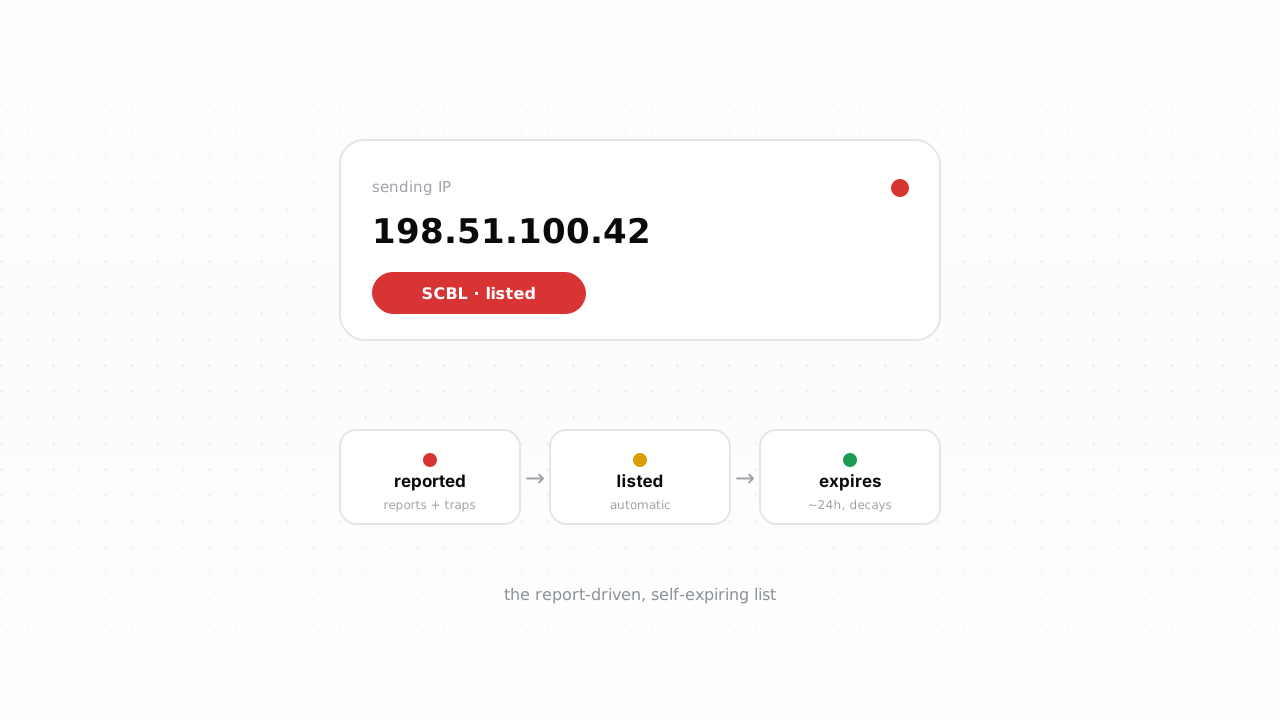
The SCBL is a real-time DNSBL of IP addresses that receivers query to decide whether to reject or filter inbound mail. It is populated automatically from two signals: spam reports submitted by SpamCop's reporting community, and hits on SpamCop's own spam traps. There is no evidence file and no committee — if the reports and trap hits cross the threshold, your sending IP goes on the list. And because the listing is tied to recent activity, it decays: once the spam source is quiet, the listing ages out on its own, historically within about a day. The fix is therefore less "beg for removal" and more "stop the source and let the clock run."
How the SpamCop blacklist works#
Four design choices make the SCBL what it is:
- Report-driven. SpamCop runs a long-standing spam-reporting service. When members forward spam, the system parses the message, traces it back to the originating IP, and files a report against that address. Enough reports against one IP in a short window push it onto the blocklist.
- Spam-trap fed. Alongside human reports, SpamCop seeds spam traps — addresses that should never receive real mail. Any message that lands in one is treated as strong evidence the sender is mailing addresses it never earned.
- IP-only, automatic. The SCBL lists sending IPs, not domains, and it does so by algorithm rather than review. That makes it fast — often faster than lists that wait for analyst confirmation.
- Time-decaying. This is the defining feature. A listing reflects a rolling window of recent spam. When the reports and trap hits stop, the listing expires automatically. You don't strictly have to do anything to come off, provided the underlying source has genuinely gone quiet.
Why SpamCop is different from Spamhaus#
Both are widely used DNS blocklists, but they sit at opposite ends of the spectrum. Spamhaus is deliberate: its core lists are evidence-based, reviewed, and persistent — a listing stays until you resolve the cause and request removal, and it covers IPs and domains across several zones. The SCBL is the opposite temperament: automatic, report-driven, IP-only, and self-expiring. Neither approach is "better"; they catch different things at different speeds.
| Dimension | SpamCop (SCBL) | Spamhaus |
|---|---|---|
| Primary input | User spam reports + spam traps | Investigation, spam traps, and reviewed evidence |
| Listing decision | Automatic, threshold-based | Mostly analyst-reviewed for its core lists |
| What it lists | Sending IP addresses | IPs and domains across multiple zones |
| How it clears | Expires on its own once activity stops | Stays until the cause is fixed and removal is requested |
The practical upshot: a SpamCop listing tends to appear quickly and, if you react quickly, disappear quickly. A Spamhaus listing is slower to earn and slower to shake. When deliverability drops, it's worth checking both, because they're telling you different things.
How you end up on the SpamCop blacklist#
The routes onto the SCBL are the familiar hygiene failures, amplified by the fact that a handful of annoyed recipients can file reports:
- Complaints at scale. Recipients who never asked to hear from you — or who forgot they did — mark or report your mail. On a report-driven list, complaints are the raw fuel.
- Spam-trap hits. Mailing addresses you scraped, bought, or simply never cleaned means eventually hitting a trap, which weighs heavily.
- Stale, high-bounce lists. Mailing an aged list that you haven't verified generates the exact pattern — dead addresses and reactivated traps — that report-and-trap systems are built to catch.
- A compromised account or relay. If something on your network is hijacked and pumping spam, the reports pile onto your IP fast.
- Shared-IP neighbors. On a shared sending IP, another tenant's spam can get the whole address listed — and take your legitimate mail down with it.
The false-positive problem#
The SCBL has a long-standing reputation for being aggressive, and that reputation is fair. Because it acts on reports and traps automatically, it can catch mail that isn't really spam. Two classic cases:
- Forwarded mail. When a server forwards inbound mail (say, an old address that forwards to a new one), it can end up relaying spam that recipients then report — against the forwarding server's IP, not the original sender's.
- Mailing lists. A discussion list that relays a member's message can catch reports meant for the message's true origin, or trip a trap subscribed to the list.
None of this means you should shrug off a listing. Many receivers use the SCBL carefully — as one signal among several, or for scoring rather than outright rejection — but plenty still block on it, and while you're listed your mail to them suffers.
How to check if you're on the SpamCop blacklist#
The authoritative lookup is SpamCop's own blocklist checker at spamcop.net/bl.shtml. Enter your sending IP address and it will tell you whether the IP is currently listed and, when it is, show context about the reports or trap activity behind the listing. Check the IP that actually sends your mail — for most senders that's your email provider's outbound IP, not your website's server. For the broader picture across many lists at once, see our guide to checking whether you're blacklisted.
How to get off — and why waiting often works#
Because the SCBL is self-expiring, the delisting process is different from the usual grind. Follow this order:
- Find and stop the source. This is the whole game. Identify what triggered the reports and trap hits — a bad campaign, a stale segment, a compromised account, a misconfigured forwarder — and shut it down. Secure any breached mailbox, pause the offending send, and stop mailing addresses you can't confirm.
- Let the listing decay. Once the source is genuinely quiet, the listing expires on its own, historically within roughly 24 hours. For many senders, fixing the cause and waiting is the entire remedy.
- Use the manual delist form if you need it sooner. SpamCop does provide a manual removal path. It's useful when you're confident the activity has stopped and you can't wait for the automatic expiry — but if the spam is still flowing, a manual delist won't stick, and you'll be relisted.
The one mistake to avoid is treating removal as the goal. As our delisting guide stresses, clearing a listing while the cause is live just resets a clock that's about to restart. Fix first, clear second.
How to avoid the SpamCop blacklist#
Staying off a report-and-trap list is straightforward in principle: send mail people want, only to addresses that exist, and make it easy to leave.
- Honor unsubscribes instantly and prominently. Every recipient who can't find the unsubscribe is a recipient who might report you instead. A frictionless opt-out is your cheapest complaint-prevention tool.
- Wire up feedback loops. FLs let major mailbox providers tell you who complained so you can suppress them immediately — before those complaints compound into a listing.
- Keep the list clean. Verify new signups and periodically re-check your existing list so dead addresses and reactivated spam traps never get mailed. This is the single most effective way to avoid trap hits and keep bounces down.
- Only mail engaged, permissioned contacts. Purchased and scraped lists are a direct route to complaints and traps. Confirmed opt-in protects your sender reputation more than any tactic.
- Watch your bounce rate. A climbing bounce rate is an early warning that your list is decaying toward the traps and dead addresses that get IPs listed.
Catch a listing before it costs you#
The SCBL's speed cuts both ways: a listing can appear within hours of a bad send, and it gives you no notification. If you don't find out until replies dry up, you've already lost inbox placement at every receiver that consults the list. The reliable way to hear about it in time is continuous blacklist monitoring, which watches your sending IPs and domains against SpamCop and other major lists and alerts you the moment a listing appears — so you can stop the source and let it decay before the damage spreads.
Frequently asked questions#
What is the SpamCop blacklist?#
The SpamCop blacklist, formally the SpamCop Blocking List (SCBL), is a real-time DNS blocklist operated under Cisco Talos that lists IP addresses reported for sending spam. It's populated automatically from spam reports submitted by SpamCop's reporting community and from hits on SpamCop's spam traps. Mail servers query it to help decide whether to reject or filter inbound mail from a given IP.
How long does a SpamCop listing last?#
SpamCop listings are time-decaying: they reflect recent spam activity and expire automatically once that activity stops, historically within about 24 hours. That means the primary fix is to find and stop the source of the spam rather than to file for removal. A manual delisting form exists for when you need to clear a listing sooner, but it won't hold if the offending mail is still flowing.
Why does SpamCop have a reputation for false positives?#
Because the SCBL lists automatically from reports and trap hits, it can catch mail that isn't truly spam — most often from forwarded messages and mailing lists, where a relaying server gets reported for traffic it merely passed along. The self-expiring design softens the impact: once the offending messages stop moving through your IP, the listing ages out. Even so, some receivers block on it, so a listing is worth resolving quickly.
How is SpamCop different from Spamhaus?#
Spamhaus is deliberate and persistent: its core lists are evidence-based and reviewed, cover both IPs and domains, and stay until you fix the cause and request removal. The SpamCop blacklist is automatic, report-driven, IP-only, and self-expiring — quicker to list and quicker to clear. When deliverability drops it's worth checking both, since they surface different problems at different speeds.
The SpamCop blacklist can list a sending IP within hours and clear it just as fast — but only if you catch it in time. Qualisend's blacklist monitoring watches your domains and IPs against SpamCop and other major lists continuously and alerts you the moment anything changes, while email verification strips out the dead addresses and spam traps that generate the complaints and trap hits behind most listings in the first place.