

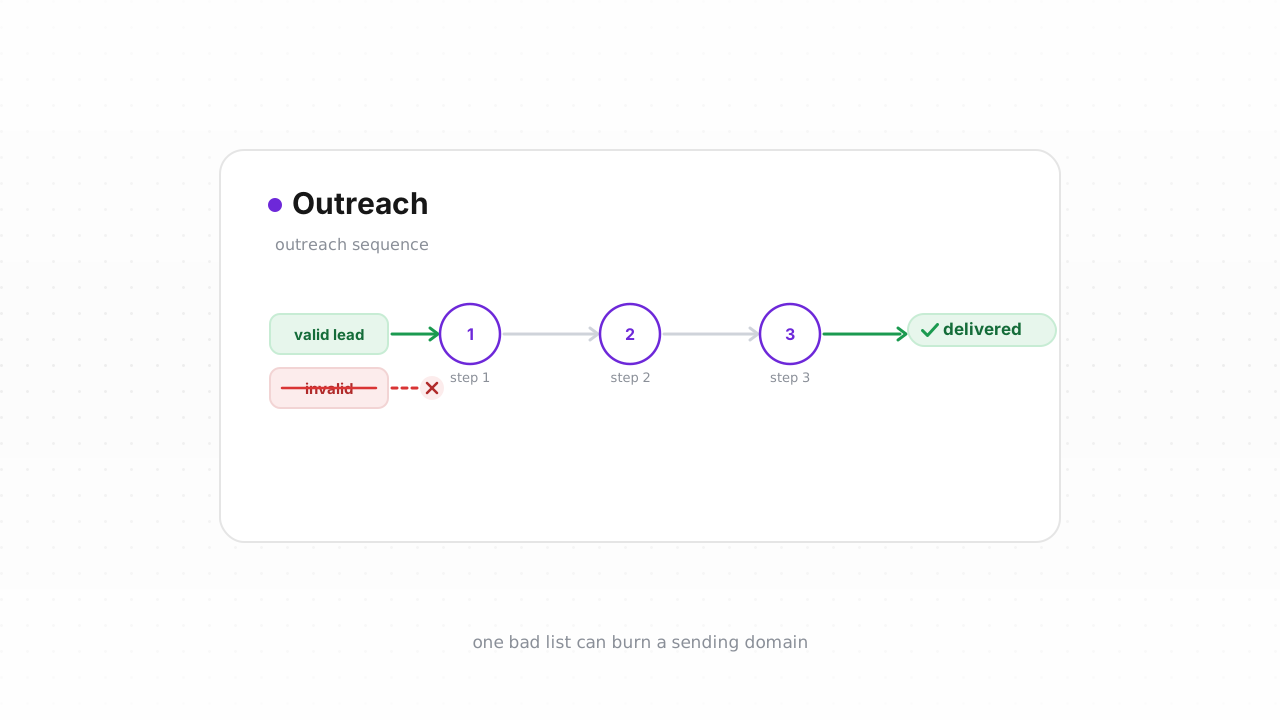
Cold outreach is unforgiving about bounce rate. Unlike marketing to an opted-in list, your prospects have never heard from you, so mailbox providers scrutinize your first sends hard. Send to a batch of dead addresses and you don't just lose those touches, you teach Gmail and Outlook that your domain sends to people who don't exist. Outreach is a capable sales engagement platform, and it has bounce protection built in, but that feature is a safety net, not a list-cleaning strategy. This guide shows how to verify prospects before they ever enter a sequence, so your cadences run on addresses that actually resolve.
What Outreach's bounce protection does#
Outreach includes a bounce-handling layer that reacts to sends. When a message hard bounces, Outreach records the bounce on the prospect, can mark the email address as bad, and pulls that prospect out of active sequences so you don't keep hammering a dead mailbox. It also maintains an opt-out and do-not-contact model, so addresses you've flagged, or that have bounced, are suppressed from future sends. This is genuinely useful. It stops the second, third, and fourth email to an address that already failed.
The critical word is already. Outreach's protection is reactive: it learns an address is bad by sending to it and watching the bounce come back. By then the damage to your reputation is done, because the mailbox provider has already seen you attempt delivery to a nonexistent recipient. Bounce protection limits the blast radius of a bad list. It does not stop the first bad send, and on a cold list the first send is exactly the one that counts. That's the gap independent verification fills. For a deeper look at why the first touch matters so much, see our guide to email verification for cold email.
Why you still verify independently#
Cold email lives or dies on two numbers: your bounce rate and your domain reputation. They're linked. A high bounce rate is one of the fastest ways to wreck the second. The Google and Yahoo sender requirements put a hard emphasis on keeping bounces and spam complaints low, and cold senders operating from a young or lightly warmed domain have almost no margin. One unverified list, run through a sequence at volume, can spike bounces high enough to tank deliverability for every campaign sharing that domain and mailbox. If you've spent weeks warming a domain, a single bad import can undo it in an afternoon. Our piece on why bounce rate matters breaks down the reputation math in detail.
Prospecting data is exactly the kind of data that goes stale. People change jobs, companies rename their mail domains, and scraped or purchased lists are riddled with guesses like first.last@company.com that were never real. Outreach doesn't know which of those resolve until it tries. Qualisend does, before you send. Each address comes back with one of four verdicts, deliverable, risky, undeliverable, or unknown, plus a reason code, a 0–100 confidence score, the MX provider, and SMTP probe evidence. Sub-flags call out catch-all domains, disposable addresses, role inboxes like sales@, and full mailboxes. That resolution is what lets you make a keep-or-skip decision per prospect instead of finding out the hard way. If you're new to catch-all domains, which are common on the corporate accounts you're prospecting, our explainer on what a catch-all address is is worth a read, along with the primer on role, disposable, and free addresses.
Step-by-step: export, verify, keep invalids out of the sequence#
The goal is simple: no address enters an Outreach sequence until it has been verified. Here's the loop that works today.
1. Export your prospects from Outreach. Pull the prospects you're about to sequence into a CSV. You can export from a prospect view, a saved filter, or a report, keeping the email column and a stable identifier so you can match rows back on the way in. Do this before you add anyone to a cadence.
2. Verify the list with Qualisend. Upload the CSV to a bulk job, which handles up to 1,000,000 addresses per run and charges duplicates only once. If you'd rather not touch a spreadsheet, wire the same step through Zapier, Make, or n8n. Every row returns its verdict, reason code, confidence score, and sub-flags.
3. Decide per verdict. Keep deliverable addresses and let them flow into your sequence. Hold undeliverable ones out entirely, don't import them, or import them straight into a do-not-contact or suppressed state in Outreach so they can never receive a send. For risky results, catch-all domains and role inboxes especially, throttle: route them to a lower-volume, more conservative cadence rather than your main push, or set them aside for manual review. Re-check unknown results later, since a temporary failure like greylisting can resolve on a second pass.
4. Import the clean set and sequence it. Bring only the deliverable and vetted-risky prospects back into Outreach and enroll them. The invalids never enter a cadence, so they never bounce, and your bounce protection has almost nothing to react to.
5. Keep it continuous. Prospect data decays, so verify each new batch on its way in rather than trusting a list you cleaned last quarter. Pairing this loop with a proper warm-up of your sending domain and the broader habits in our cold email deliverability guide is what keeps a cold program healthy over months, not weeks.
For teams that want this without the CSV round-trip, a native Qualisend connector for Outreach is on the way. The Outreach integration is being built to verify prospects in place and gate sequence entry automatically. It isn't live yet, so today the supported paths are the CSV loop above and the API. If you'd rather automate the verify step directly against your own tooling, the Verification API exposes the same verdicts over REST with scoped keys, rate limits, and webhooks, so you can verify a prospect the moment it's created and decide whether it's allowed into a cadence. Outreach behavior above last verified against Outreach's documentation, August 2026.
You can start on the free plan, which includes 100 one-time credits that never expire, enough to verify a first batch and see how many prospects your bounce protection would otherwise have discovered the expensive way. For the full picture on keeping cold sends healthy, our email deliverability guide ties the verification step into everything else that moves the needle.
Frequently asked questions#
Does Qualisend have a native Outreach integration?#
Not yet, but it's coming. The native Outreach connector is actively being built and will let you verify prospects in place and gate sequence entry automatically. Until it ships, the supported paths are the CSV export-and-verify loop and the Verification API. You can follow progress on the Outreach integration page.
Should I verify addresses before they enter Outreach?#
Yes. Verify before a prospect is added to any sequence or cadence, ideally before you even import it. Cold outreach reputation is decided on the first send, and Outreach's built-in bounce protection is reactive, it learns an address is bad by sending to it and watching the bounce. Verifying first keeps undeliverable addresses out of your cadences entirely, so they never bounce.
Isn't Outreach's bounce protection enough on its own?#
It's helpful but not sufficient for cold email. Bounce protection stops repeat sends to an address that has already bounced, which limits the damage from a bad list. It does not prevent the first bounce, and on a cold list the first send is the one that shapes your domain reputation. Independent verification catches bad addresses before that first send happens.
What should I do with risky and catch-all results?#
Don't treat them like deliverable addresses. Route risky results, catch-all domains, and role inboxes to a lower-volume, more conservative cadence, or set them aside for manual review, rather than sending to them at full volume. Qualisend flags catch-all, disposable, role, and full-mailbox conditions with a confidence score so you can decide per prospect.
How many prospects can I verify at once?#
A single Qualisend bulk job handles up to 1,000,000 addresses, and duplicates are charged only once. You can upload a CSV, connect it through Zapier, Make, or n8n, or call the Verification API directly. The free plan includes 100 one-time credits that never expire if you want to test the loop first.