

Because a blacklist listing is silent — no notification, no error — you usually find out from the symptoms, not the cause. The trouble is that the symptoms look like ordinary email underperformance, so it's easy to blame the subject line or a tired list and miss what's really happening. Here are the warning signs that point to a listing, so you know when to stop guessing and go check.
The short answer#
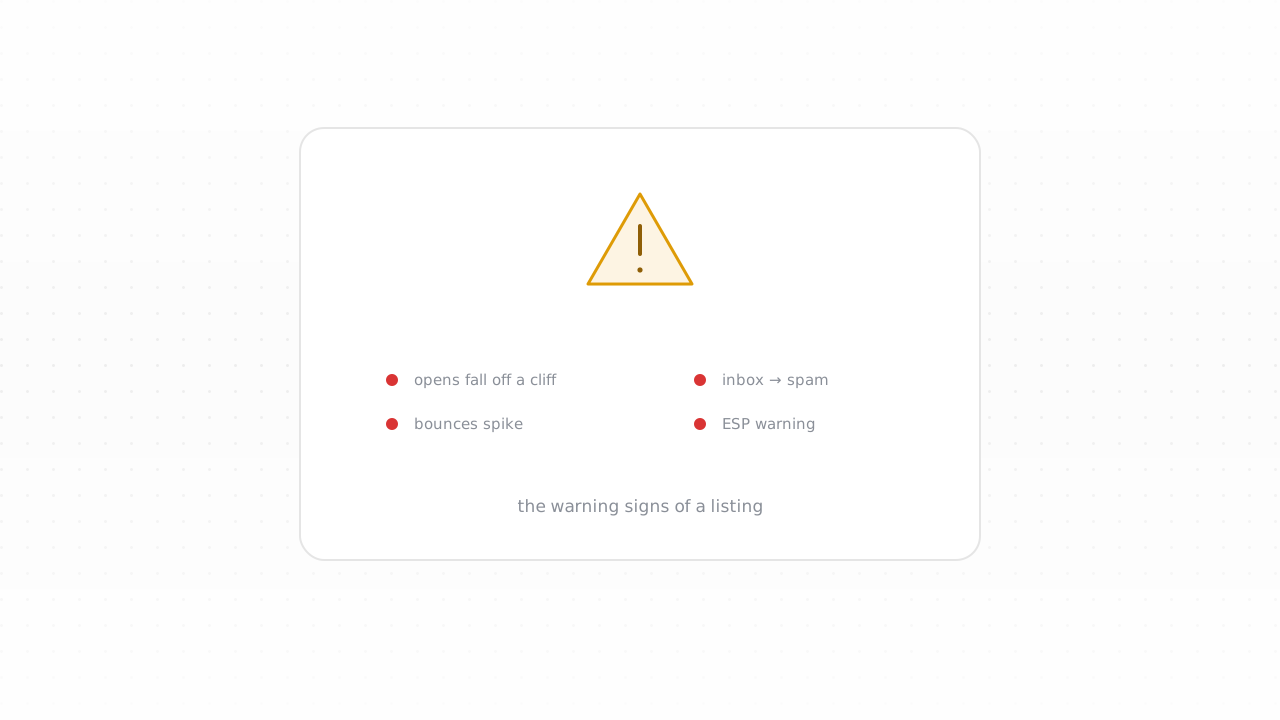
The clearest signs you may be blacklisted are a sudden, unexplained drop in deliverability or opens, a spike in bounces or rejections, mail landing in spam when it used to reach the inbox, and warnings from your ESP or reputation dashboards. Any one of these can have other causes, but together — and especially when the change is abrupt rather than gradual — they're a strong signal to look up your sending IP and domain against the major blocklists.
The warning signs#
1. Opens and clicks fall off a cliff#
Engagement metrics drift over time for all sorts of reasons. A blacklisting looks different: a sharp, sudden drop across the board, often overnight, with no change to your content or audience. If your open rate halved between one send and the next, a listing is a prime suspect.
2. Bounces and rejections spike#
When servers that use a blocklist reject your mail, those rejections show up as bounces. A sudden climb in your bounce or rejection rate — especially with server responses mentioning a block or a specific list name — is one of the more direct symptoms.
3. Mail that used to inbox now goes to spam#
If messages that reliably reached the inbox are suddenly in the spam folder — your own test sends included — your placement has changed, and a listing is a common reason. Watch for it on the big providers (Gmail, Outlook) first, since they cover most audiences.
4. Recipients or clients report missing mail#
Sometimes the first alert is human: a customer says a receipt never arrived, or a client asks why their campaign flopped. Undelivered transactional mail — password resets, confirmations — is especially likely to be noticed and reported.
5. Bounce messages name a blocklist#
The most explicit sign of all: a bounce-back that quotes a rejection reason referencing a list, such as a Spamhaus URL or a "listed on" message. That's not a symptom to interpret — it's a listing telling you directly. See Spamhaus explained for what those references mean.
6. Your ESP flags or pauses you#
Email providers watch their own sender reputation closely and may warn you, throttle you, or pause sending if your IP or domain gets listed — because your problem becomes their problem. A warning from your ESP is a signal to check immediately.
7. Reputation dashboards drop#
Google Postmaster Tools and Microsoft SNDS show your domain and IP reputation at the two biggest providers. A reputation reading falling from high to low, or into the "bad" band, frequently coincides with a listing even when the dashboard doesn't name one.
From symptom to certainty#
Spotting a sign is step one; confirming it is step two. Look up your true sending IP and domain against the major lists and the operators' own pages, cross-check your reputation dashboards, and read your bounce messages for named lists. If you find a listing, move to fixing the cause and delisting. If you don't, the same symptoms point you toward the other deliverability culprits — authentication, content, or a tired list.
The catch with symptoms is that they arrive late — after the listing has already been costing you. That's the gap continuous monitoring closes: instead of inferring a listing from a drop in your numbers weeks later, you get told the moment it happens.
Frequently asked questions#
How do I know if I've been blacklisted?#
Watch for a sudden, unexplained drop in opens or deliverability, a spike in bounces, mail moving from inbox to spam, bounce messages that name a blocklist, or a warning from your ESP or reputation dashboard. Any of these is a prompt to look up your sending IP and domain against the major lists to confirm.
What does a blacklist bounce message look like?#
Often a rejection that names the list or links to it — for example a message saying the IP is "listed on" a blocklist, sometimes with a Spamhaus URL or a removal link. Unlike a generic bounce, it points directly at the cause, so it's one of the most reliable signs of a listing.
Can low open rates mean I'm blacklisted?#
They can, but not on their own. A gradual decline is usually list fatigue or content; a sudden drop with no other explanation is more consistent with a listing. Treat a sharp, unexplained fall as a reason to check your blacklist status rather than a confirmation by itself.
My ESP paused my account — was I blacklisted?#
Possibly. ESPs monitor their shared sending reputation and may pause or throttle a sender whose IP or domain gets listed, because a listing threatens deliverability for everyone on that infrastructure. Check with your provider and look up your identities against the major lists to confirm.
By the time the symptoms show, a listing has already been costing you — so the goal is to skip the guessing entirely. Qualisend's blacklist monitoring watches your domains and IPs against 40+ lists continuously and alerts you the moment a listing appears, and verifying your list removes the dead addresses and spam traps behind most listings.