

When you send email on behalf of clients, a blacklist listing isn't a technical footnote — it's a client's campaigns silently failing and your name attached to the explanation. Agencies carry a particular kind of blacklist risk: more sending identities to watch, reputations that can bleed into each other, and clients who notice the symptoms before you do. Here's why monitoring matters more for agencies than for anyone, and how it protects the thing you actually sell — results.
The short answer#
An agency's blacklist exposure is multiplied: every client domain and every sending IP is a surface that can get listed, and on shared infrastructure one client's bad list can drag down another's deliverability. Because a listing is silent, the client often feels the harm — a flat campaign, a dip in sales — before you've spotted the cause, which puts you on the back foot of a conversation you didn't start. Continuous monitoring across your whole book of business turns that from a client complaint into an alert you act on first.
Agency risk is multiplied, not added#
A single brand watches one set of sending identities. An agency watches many — and the risk doesn't just add up, it interacts:
- More surfaces. Every client domain, subdomain, and sending IP is another thing that can land on a list. Ten clients is roughly ten times the exposure of one.
- Shared reputation. If clients send from shared IP pools, a listing triggered by one client's poor hygiene can suppress deliverability for the others on that IP — clients who did nothing wrong.
- Inherited lists. You often onboard clients whose lists you didn't build — bought, scraped, or long-neglected — carrying spam-trap and hard-bounce risk straight into your infrastructure.
The client hears about it first#
The hardest part of an agency listing is the sequence. A listing is silent, so there's no alert — the client just sees their numbers sag: a promotion that underperforms, a launch that lands flat, sales that dip for no obvious reason. They come to you asking what happened, and you're now diagnosing a reputation problem live, in front of the client, with the clock already weeks in.
That's a bad position for a relationship built on delivering results. Being the one who flags the listing — "we caught a Spamhaus listing on your domain this morning and we're already on it" — is a completely different conversation than being the one who explains it after the fact.
What monitoring protects#
Set up across your whole client base, monitoring defends the things an agency is actually paid for:
- Client results. Catch a listing in hours, not weeks, and you cap the campaign performance lost to it.
- The relationship. Proactive beats reactive. An alert you raised builds trust; a problem the client found erodes it.
- Your other clients. On shared infrastructure, catching one client's listing fast limits the collateral damage to everyone else on that IP.
- Your delisting position. A record of when a listing appeared and cleared is evidence for the client — and for the operator when you request removal.
A simple posture for agencies#
You don't need a complicated program — a consistent one:
- Verify at onboarding. Clean every new client's list before the first send so you're not importing spam-trap and bounce risk into shared infrastructure.
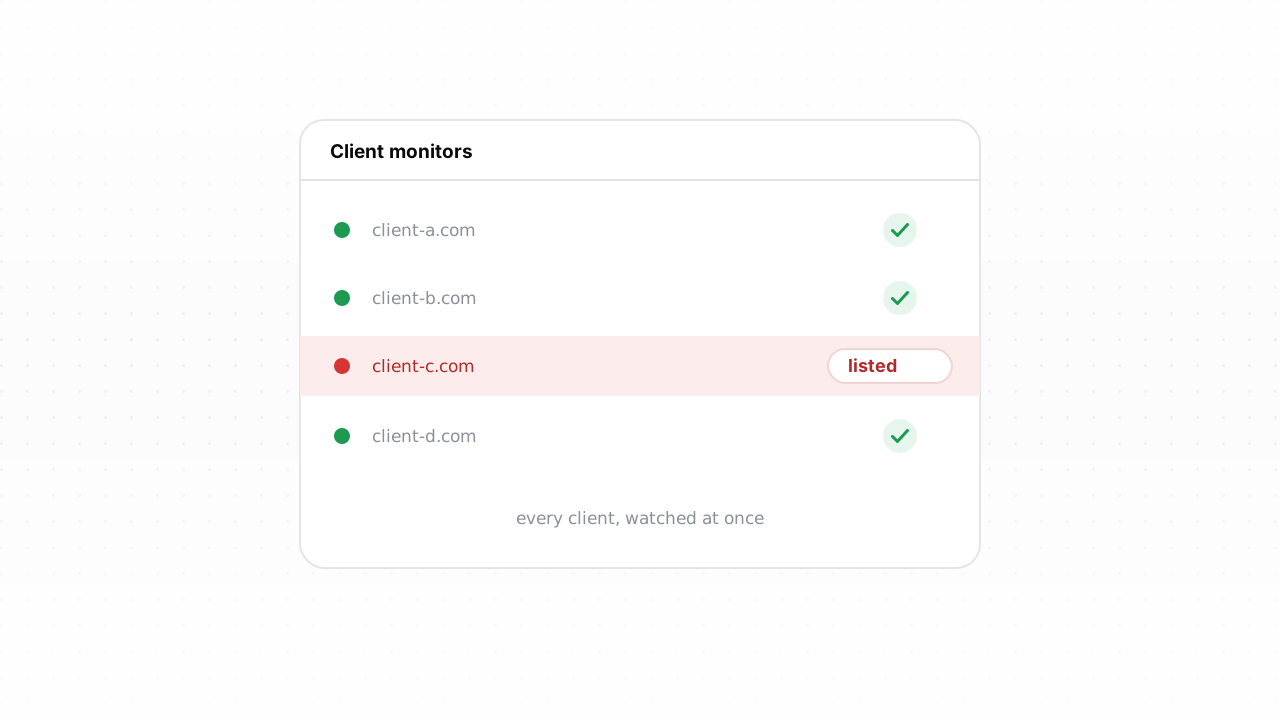
- Monitor every identity, continuously. Watch each client's domains and sending IPs against the major lists so a listing surfaces as an alert, not a complaint.
- Respond by the playbook. When an alert fires, pause the affected sender, fix the cause and delist, and tell the client you're handling it — ideally before they've noticed.
Frequently asked questions#
Why do agencies need blacklist monitoring more than individual senders?#
Because their exposure is multiplied. An agency manages many client domains and IPs, any of which can be listed, and on shared infrastructure one client's listing can hurt others. Since listings are silent, the client often feels the impact first — so monitoring across the whole book is what lets the agency catch and handle a listing before it becomes a client complaint.
Can one client's bad list get another client blacklisted?#
Indirectly, yes — through shared infrastructure. If clients send from the same IP pool, one client's spam-trap hits or complaints can get that IP listed, suppressing deliverability for everyone else sending from it. Verifying every client's list and monitoring each identity limits that spillover.
How should an agency handle a client's blacklisting?#
Catch it fast with monitoring, then follow the delisting playbook: pause the affected sender, find and fix the root cause, request removal through the operator, and keep the client informed throughout. Being the one who flags and handles the listing protects the relationship far more than explaining it after the client notices.
What's the best way to prevent client listings?#
Verify every client list before sending — most agency listings trace to inherited lists full of dead addresses and spam traps at onboarding. Pair that with per-client monitoring so anything that slips through is caught immediately rather than weeks later.
Your clients judge you on results, and a silent listing quietly erodes them. Qualisend's blacklist monitoring watches every client's domains and IPs against 40+ lists and alerts you the moment one is listed, and list verification cleans the inherited lists that cause most agency listings — so you catch problems before your clients do.