

A blacklist listing is the quietest way to lose the inbox. Nothing breaks, no error reaches your dashboard, and your campaigns keep sending — they just stop arriving. Most senders find out weeks later, from a drop in opens or an angry client, long after the damage is done. Monitoring closes that gap: it watches your sending identities continuously and tells you the moment a listing appears, so you can act in hours instead of weeks.
The short answer#
Blacklist monitoring means checking your domains and sending IPs against the major DNS blocklists on a continuous schedule, and alerting you when a listing appears or clears. It matters because a listing is silent and time-sensitive: the faster you catch it, the less reputation you lose and the sooner you can pause the affected sender, fix the cause, and request delisting. You can check manually now and then, but listings don't wait for you to remember.
Why "check it sometimes" isn't enough#
Manually running a blacklist lookup is useful, but it's a snapshot. Listings are events that happen at a specific moment — a spam-trap hit, a complaint spike, a compromised account — and the cost accrues from that moment until you notice. If you check monthly, a listing that lands the day after your check runs for four weeks before you see it. By then your sender reputation has already absorbed weeks of throttling and spam-foldering.
Continuous monitoring turns a listing from a discovery you stumble on into an alert you receive. That single change — from pull to push — is the whole point.
What to monitor#
A complete picture watches every identity your mail is judged on:
- Your sending domains — the domain in your
Fromaddress and its subdomains, checked against domain-based lists like Spamhaus DBL. - Your sending IPs — the addresses your mail actually leaves from, checked against IP-based lists. On a shared IP you can be listed for a neighbour's behaviour, which makes monitoring more important, not less.
- The links in your mail — domain lists also flag URLs inside the message body, so a shortener or a partner domain gone bad can filter otherwise-clean mail.
The lists that matter most are the widely-consulted ones — Spamhaus above all, plus Barracuda, SpamCop, and a handful of others. Chasing every obscure regional list is wasted effort; missing a Spamhaus listing is not.
What good monitoring does#
Not all monitoring is equal. The traits that make it actually useful:
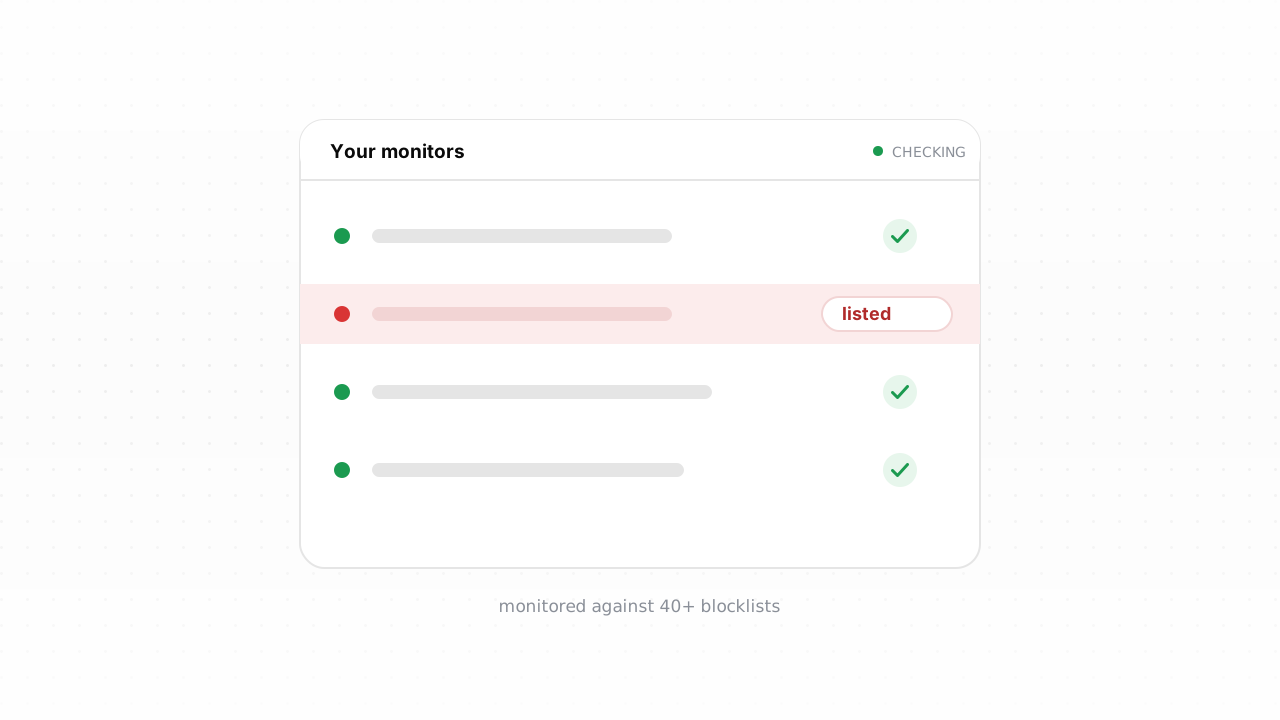
- Alerts in both directions. You want to know when a listing appears — and again when it clears, so you know when it's safe to resume sending.
- Every sending identity, continuously. Domains and IPs, checked against many lists on a tight schedule, not a manual once-a-quarter lookup.
- Listing history. A record of state changes is evidence when a client or a deliverability auditor asks what happened and when.
- A path to action. An alert that names the exact list and links to its delisting steps saves the frantic search when every hour counts.
What to do when an alert fires#
Monitoring buys you time; here's how to spend it. Pause campaigns from the listed identity, then work the delisting process: find the root cause, fix it, and only then request removal. Common causes are spam-trap hits, a complaint spike, sustained hard bounces from a stale list, or a compromised account. Delisting before you've fixed the cause just gets you relisted, so the order matters.
Prevention still beats detection#
Monitoring is the safety net, not the strategy. The listings you never get are the ones you prevent: verify your list so you're not mailing dead addresses or spam traps, collect addresses with permission, keep complaints low, authenticate your mail, and warm up new infrastructure gradually. Do those, and monitoring becomes a quiet alarm that rarely rings — which is exactly what you want.
Frequently asked questions#
What is email blacklist monitoring?#
It's the practice of continuously checking your sending domains and IP addresses against the major DNS blocklists and being alerted when a listing appears or clears. Unlike a one-off lookup, monitoring catches a listing at the moment it happens rather than whenever you next remember to check — which is the difference between losing hours of deliverability and losing weeks.
How often should blacklists be checked?#
Continuously, or as close to it as practical. A listing is a point-in-time event, and its cost accrues until you notice, so the interval between checks is roughly the delay you'll add to your response. Manual monthly checks leave a wide gap; automated monitoring shrinks it to minutes.
Which blacklists should I monitor?#
Prioritise the widely-consulted lists — Spamhaus most of all, since its lists are used by a large share of the world's mail servers — plus a handful of others like Barracuda and SpamCop. A listing on an obscure regional list may affect almost no one; a Spamhaus listing affects a lot of your recipients and needs urgent action.
Can I get blacklisted on a shared IP through no fault of my own?#
Yes. On a shared IP your reputation is pooled with everyone else sending from it, so a neighbour's bad behaviour can get the whole address listed. That's a reason to monitor closely, and, at volume, to consider a dedicated IP you fully control.
You can't fix a listing you don't know about. Qualisend's blacklist monitoring checks your domains and mail IPs against 40+ DNS blocklists continuously and emails you the moment a listing appears — or clears. Pair it with list verification to remove the dead addresses and spam-trap risk that cause most listings in the first place.