

Of all the blocklists that can hurt your email, one matters more than the rest combined. Spamhaus lists are consulted by a huge share of the world's mail servers, so a Spamhaus listing suppresses your mail to a large slice of every audience — often within hours, and with no warning. Here's what Spamhaus actually is, the individual lists inside it, and how to get off each one.
The short answer#
Spamhaus is a non-profit threat-intelligence organisation whose DNS blocklists help mail servers decide what to reject or filter. It isn't one list but several — each targeting a different problem — usually queried together through the combined ZEN zone for IPs and the DBL for domains. A listing on any of them can cost you the inbox at a large number of receivers, so it's the first thing to check when deliverability drops and the first to fix.
Why Spamhaus matters more than other lists#
There are dozens of blocklists, and they are not equal. Spamhaus is by far the most consequential because its data is used so widely — by mailbox providers, ISPs, and filtering appliances around the world. A listing on an obscure regional list might affect almost no one; a Spamhaus listing affects a large share of your recipients at once. When you check whether you're blacklisted, Spamhaus is the result that decides whether you have a real emergency.
The Spamhaus lists, one by one#
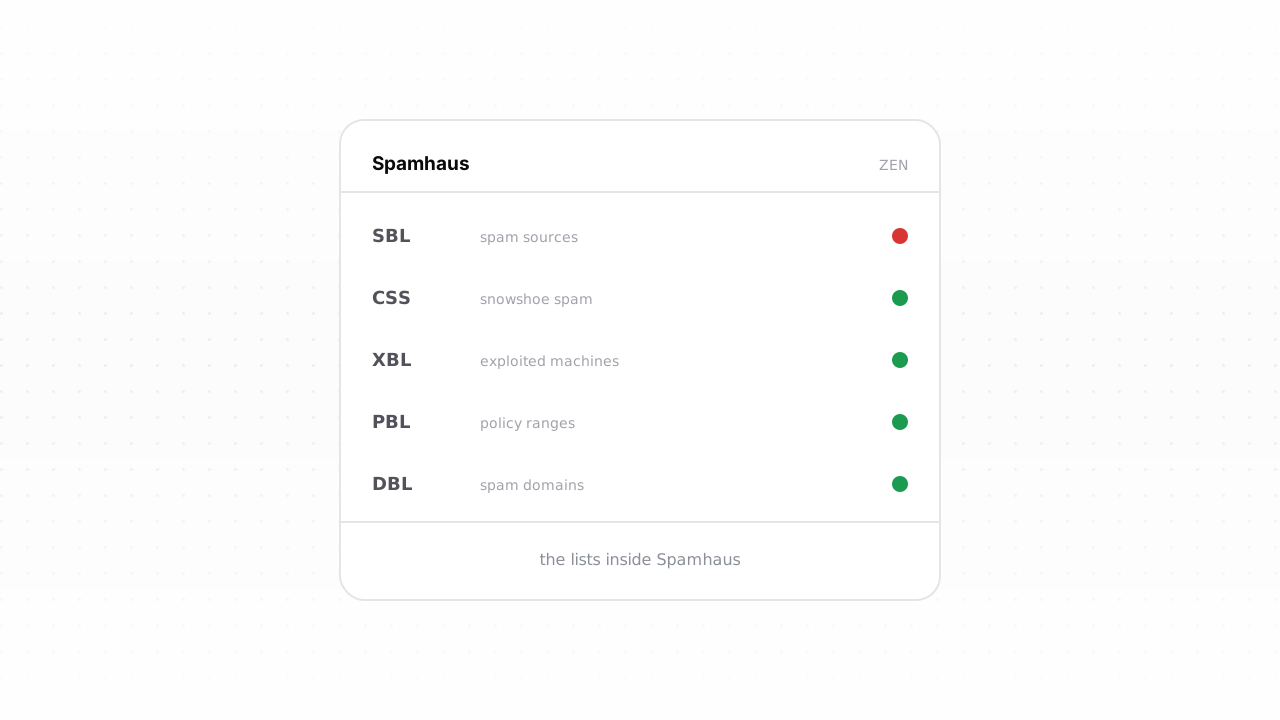
Each zone flags a different kind of problem:
- SBL — Spamhaus Block List. IP addresses Spamhaus has determined are sending spam, listed after evidence and review. The core "this sender is a spam source" list.
- CSS — Composite Snowshoe/Blocklist. An automatically-populated part of the SBL that catches "snowshoe" spam — senders spreading low-volume mail across many IPs and domains to stay under the radar.
- XBL — Exploits Block List. IPs of hijacked or infected machines, open proxies, and compromised devices sending spam. A listing here often means a machine on your network is compromised.
- PBL — Policy Block List. IP ranges that ISPs and Spamhaus say should not be sending mail directly to other servers — dynamic and residential ranges. It's a policy statement, not a spam accusation: if you're on it, route through a proper relay or ESP.
- DBL — Domain Block List. Domains found in spam, including the domains of links inside a message. A DBL listing can filter your mail even from a spotlessly clean IP.
- ZEN. Not a separate list but the combined zone that returns SBL, CSS, XBL, and PBL results in a single query — what most receivers actually use for inbound IP filtering.
How you end up on a Spamhaus list#
The path onto Spamhaus is the same set of hygiene failures that hurt every other part of deliverability:
- Hitting Spamhaus's own spam traps by mailing addresses you shouldn't have — the clearest signal of a purchased or scraped list.
- Drawing spam complaints at scale.
- Sending sustained hard bounces from a stale or neglected list.
- A compromised account or open relay (which lands you specifically on the XBL).
- Sending directly from a dynamic/residential range (which puts you on the PBL by policy).
How to check and get off#
Use the Spamhaus lookup to check an IP or domain — it's the authoritative source and links each listing to its own removal path. Then follow the delisting order that actually works:
- Fix the cause first. Spamhaus is explicit that removing a listing without resolving the underlying problem is pointless — you'll be relisted. Clean the list, stop the complaints, secure any compromised machine, and confirm your authentication.
- Request removal through the Spamhaus lookup. PBL range removals are largely self-service (or handled by your ESP); SBL, CSS, and XBL removals are reviewed and clear faster the more clearly the cause is resolved.
- Don't repeat it. A second listing is harder to shake, and a pattern of relisting erodes your standing.
Catch a Spamhaus listing before it costs you#
Because Spamhaus is so widely used, the hours between a listing and your response are expensive — and a listing gives you no notification. The reliable way to hear about it in time is continuous blacklist monitoring, which watches your IPs and domains against Spamhaus and other major lists and alerts you the moment a listing appears or clears.
Frequently asked questions#
What is Spamhaus ZEN?#
ZEN is Spamhaus's combined DNSBL zone: a single query against it returns results from the SBL, CSS, XBL, and PBL at once. Most mail servers use ZEN for inbound IP filtering because it covers spam sources, snowshoe spam, exploited machines, and policy ranges in one lookup.
What's the difference between the SBL, XBL, PBL, and DBL?#
The SBL lists IPs sending spam (with the CSS catching snowshoe spam automatically); the XBL lists hijacked or exploited machines; the PBL lists IP ranges that shouldn't send mail directly as a matter of policy; and the DBL lists spam domains, including link domains inside messages. IP problems show on the first three; domain problems show on the DBL.
Am I on the Spamhaus PBL, and is that bad?#
Being on the PBL isn't a spam accusation — it means your IP is in a range ISPs say shouldn't send mail directly to other servers (typically dynamic or residential). It's only a problem if you're trying to send directly from such an IP; the fix is to send through your ISP's relay or an ESP instead of routing mail yourself.
How do I get removed from Spamhaus?#
Fix the underlying cause first — clean your list, cut complaints, secure any compromised account — then request removal through the Spamhaus lookup for the specific listing. Removal only holds once the cause is resolved; see our delisting guide for the full order of operations.
A Spamhaus listing is the fastest way to lose the inbox — and the one you most need to hear about immediately. Qualisend's blacklist monitoring watches your domains and IPs against Spamhaus and 40+ other lists continuously and alerts you the moment anything changes, while list verification strips out the dead addresses and spam traps that get most senders listed.