

A blacklist listing looks free. There's no invoice, no charge, no line item — so it's easy to treat it as a technical nuisance rather than a business expense. But a listing has a very real price, paid in revenue you never see, reputation you have to rebuild, and hours your team spends firefighting. Here's how to think about what a blacklisting actually costs — and why the biggest part of the bill is the part you can't see.
The short answer#
The cost of being blacklisted is the sum of four things: the revenue from mail that doesn't arrive, the reputation damage that suppresses even your unlisted sending, the time and labour to diagnose and delist, and the opportunity cost of whatever your team stops doing to firefight. The first is immediate and the easiest to estimate; the rest are larger and slower, and all four scale with how long the listing runs before you catch it.
1. Lost revenue from undelivered mail#
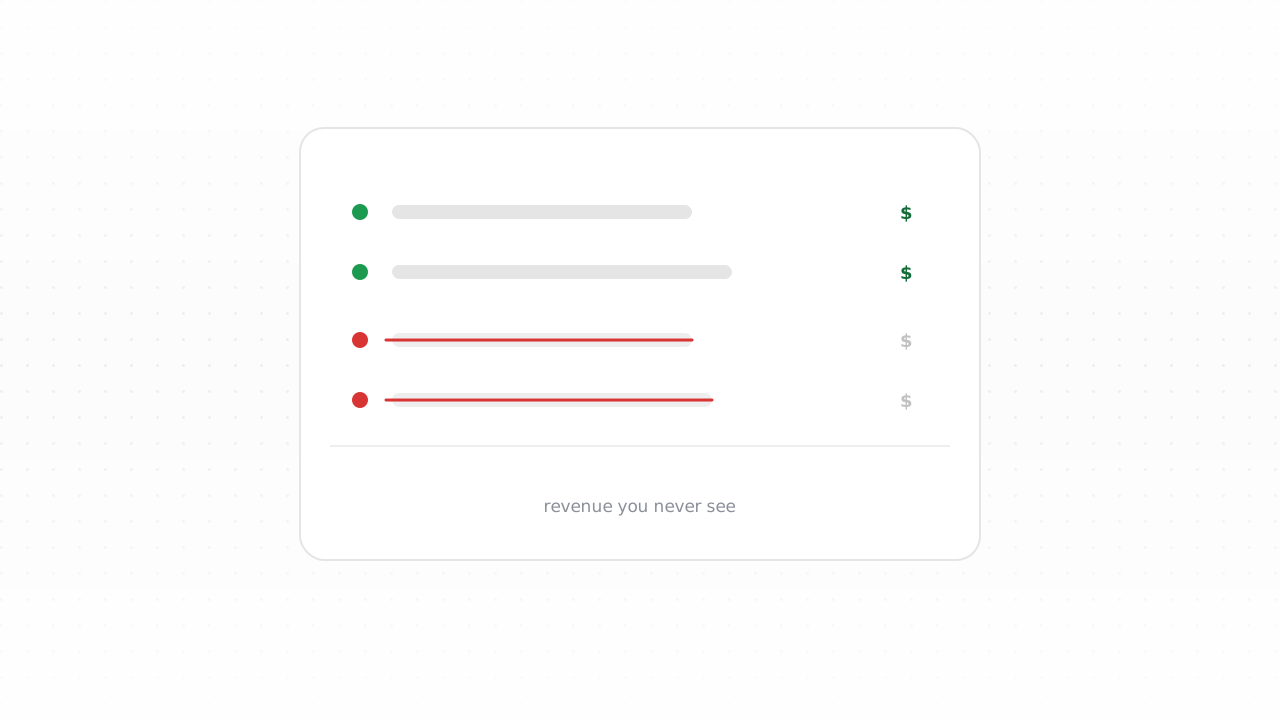
Start with the direct hit. If a listing suppresses even a fraction of your mail to affected providers, the revenue those messages would have produced simply doesn't happen. A rough way to size it:
daily email revenue × share of recipients on affected providers × days unnoticed
For a store where email drives a meaningful slice of sales, that number gets uncomfortable fast — especially because it includes not just promotions but abandoned-cart flows, back-in-stock alerts, and other automations quietly earning in the background. And it compounds: the longer the listing runs, the more the denominator (days unnoticed) grows.
2. Reputation damage — the expensive, invisible part#
The undelivered mail is only the first-order cost. Because deliverability is a feedback loop, a listing drags down your sender reputation: fewer messages land, engagement falls, and mailbox providers read that weak engagement as a signal to filter more of your mail — including on channels the listing never touched. Reputation is slow to build and slow to repair, so this cost outlasts the listing by weeks — the damage lingers past delisting. It's the part that never shows up on any report, and it's usually the largest.
3. The time and labour to fix it#
A listing is unplanned work with a hard deadline. Someone has to notice it, confirm it, find the root cause, fix it, and work each operator's removal process — often under pressure from a client or a manager. That's hours of skilled time pulled from whatever it was doing, plus the list cleaning and process changes needed to make the delisting stick. Do it wrong — request removal before fixing the cause — and you're relisted, and paying twice.
4. Opportunity cost and trust#
The subtlest costs don't fit in a spreadsheet:
- Transactional trust. Password resets and receipts landing in spam generate support tickets and quietly erode confidence in your brand.
- Diverted focus. The team firefighting a listing isn't shipping the campaign, the feature, or the client work it was supposed to.
- Relationship risk. For agencies, a listing on a client's sending identity is a hard conversation and, sometimes, a lost account — see blacklist monitoring for agencies.
The cheapest listing is the one caught fast#
Every line of this bill — revenue, reputation, labour, trust — grows with the time a listing runs unseen. You can't always prevent a listing, but you can control how long it costs you, and that single variable dominates the total. Detection in an hour turns a five-figure problem into a footnote; detection in a month does the reverse.
Prevention lowers the frequency, detection lowers the severity, and the two together are what keep blacklisting off your P&L.
Frequently asked questions#
How much does being blacklisted cost?#
There's no fixed number — it's the sum of lost revenue from undelivered mail, reputation damage that suppresses future sending, the labour to diagnose and delist, and the opportunity cost of firefighting. The dominant variable is time: each cost grows with how long the listing runs before you catch it, so detection speed largely determines the total.
Is the revenue loss the biggest cost of a blacklisting?#
Often not. The immediate revenue loss is the most visible cost, but the reputation damage is usually larger and longer-lasting, because low deliverability lowers engagement, which lowers reputation, which suppresses even your unlisted mail — a cost that outlives the listing itself.
Can I get compensated for a wrongful blacklisting?#
No. Blacklist operators are independent and list based on their own criteria; there's no compensation mechanism, and there's rarely such a thing as a purely "wrongful" listing — most trace to a real hygiene issue. Your recourse is to fix the cause and request delisting through the operator's own process.
How do I reduce what a listing costs me?#
Two levers. Lower the frequency by keeping hygiene tight — verify your list, collect with permission, keep complaints and bounces low. Lower the severity by catching any listing fast with continuous monitoring, so a listing costs you hours instead of weeks.
The largest part of a blacklisting's cost is the time it runs undetected — and that's the part you can eliminate. Qualisend's blacklist monitoring alerts you the moment a listing appears, and list verification strips out the dead addresses and spam traps that cause most listings, so the bill never gets started.