

Most blocklists judge your mail by the IP it came from. The Invaluement blacklist is one of the few that also judges what's inside the message — the links and domains you put in the body. That makes it unusual, and it makes a listing genuinely confusing: your sending IP can be spotless and you can still be blocked because a domain in your content shows up in spam elsewhere. Invaluement is prized by filter operators for its very low false-positive rate, which is exactly why a listing there is worth taking seriously. Here's what Invaluement is, the zones inside it, why you might be on one, and how to get off.
The short answer#
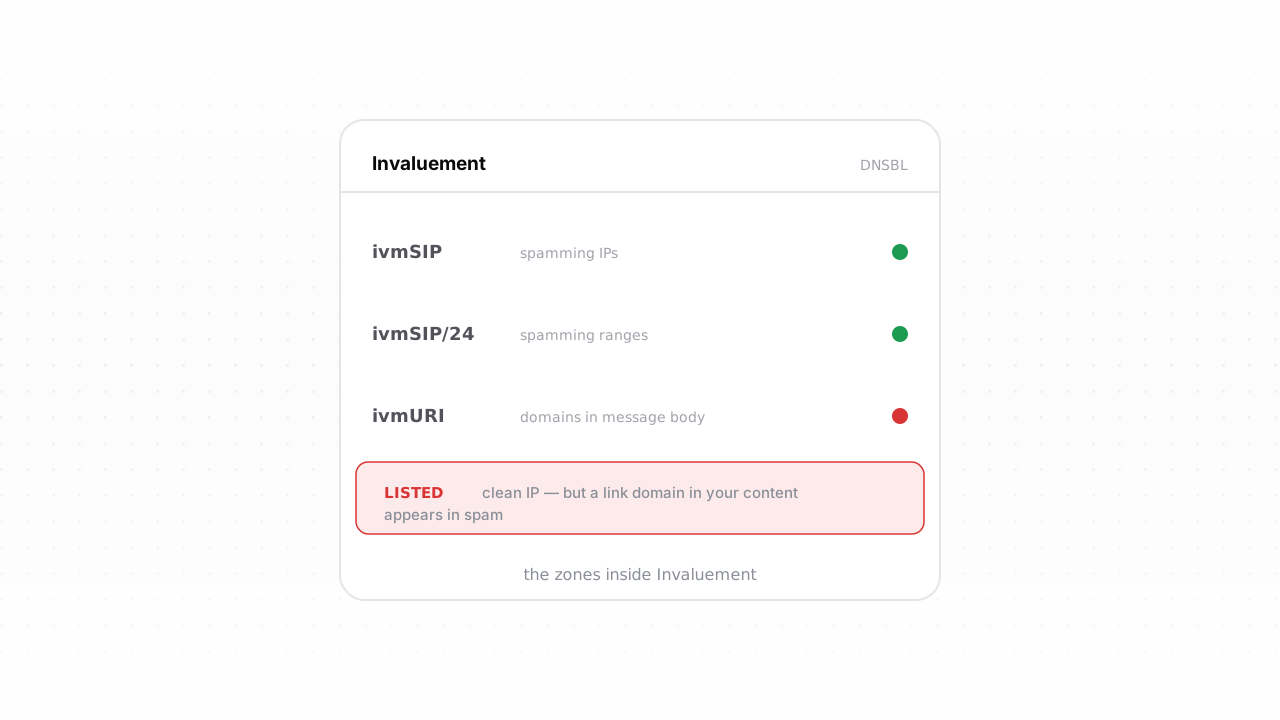
Invaluement is a DNS-based blocklist (DNSBL) with a reputation for being conservative and high-confidence — it lists slowly and rarely lists a legitimate sender by mistake. That low false-positive rate is why it's widely embedded inside commercial spam-filtering products and appliances rather than queried directly by hobbyists. It isn't a single list but a small family of zones: ivmSIP for individual spamming IPs, ivmSIP/24 for spamming address ranges, and ivmURI for spam domains and URLs found in message bodies. Removal is handled through a free removal-request form at invaluement.com.
What makes the Invaluement blacklist different#
Two things set Invaluement apart from most of the lists you'll check.
The first is body-URI listing. Through the ivmURI zone, Invaluement lists the domains and URLs that appear inside spam messages — not just the IP that sent them. When a receiver runs a message against ivmURI, it extracts the links in the body and checks each domain. If one of those domains is listed, the message can be blocked or filtered even though the sending IP is clean. Spamhaus does something similar with its Domain Block List, but many operators lean on Invaluement specifically for this kind of content-level intelligence.
The second is a deliberate bias toward low false positives. Invaluement's whole value proposition to the filter vendors that license it is that its data is safe to act on aggressively — that a listing almost always means something. Lists that block a lot of legitimate mail get turned off; lists that are careful get trusted and queried by more receivers. Invaluement sits firmly in the careful camp, which is good news if you're clean and bad news if you assume a listing is noise.
The Invaluement zones, one by one#
Each zone answers a different question about a message.
| Zone | What it lists | What triggers it |
|---|---|---|
ivmSIP | Individual IP addresses observed sending spam. | Your sending IP itself is implicated — spam, a compromised host, or a bad neighbor on a shared IP. |
ivmSIP/24 | Whole /24 IP ranges (256 addresses) associated with
spamming. | The broader block your IP lives in is dirty — common with cheap or abused hosting where spammers cluster. |
ivmURI | Domains and URLs found in the body of spam messages. | A domain in your links, tracking, or images appears in spam — even if your sending IP is perfectly clean. |
The distinction matters because it changes what "fixing it" means. An ivmSIP or ivmSIP/24 listing is an IP-reputation problem — the kind you share with every other blocklist. An ivmURI listing is a content and domain problem, and no amount of IP warming or authentication cleanup will clear it if the offending domain is still going out in your mail.
Why you might be on the Invaluement blacklist#
There are really two stories, and they call for different responses.
Your IP is the problem (ivmSIP / ivmSIP/24). This is the familiar path onto any IP blocklist. You mailed a stale or purchased list and hit spam traps; complaints spiked; a host on your network was compromised and started emitting spam; or you're on a shared or low-quality IP range where a neighbor's behaviour dragged the whole /24 down. The fix lives in your list hygiene and your sender reputation, not in the message content.
Your domain is the problem (ivmURI). This is the one that catches senders off guard. Invaluement can list a domain because it appeared in the body of spam — and that domain doesn't have to be your primary sending domain. It might be:
- A link-shortening or click-tracking domain you share with other senders, one of whom is a spammer.
- A redirect or landing domain that was abused, hijacked, or previously owned by a bad actor before you registered it.
- An image, CDN, or asset domain referenced in your templates.
- A brand-new domain with no track record, used in a campaign that also drew spam signals.
Because ivmURI keys on content, a single reused third-party domain can get your mail filtered across every receiver that consults Invaluement — which is a big reason legitimate messages land in spam with no obvious IP-level cause.
How to check the Invaluement blacklist#
Invaluement isn't a list you casually browse; it's designed to be queried programmatically by mail servers over DNS, and much of its reach is through the commercial filters that license it. Practically, that means you check it the same way you'd check any blocklist:
- Run your sending IP against a multi-blocklist lookup that includes the Invaluement zones. This tells you whether ivmSIP or ivmSIP/24 is involved.
- Check your domains — the sending domain and every domain that appears in your message body — against the ivmURI zone. This is the step most people skip, and it's the one that explains "clean IP, blocked mail."
- Read the message, not just the envelope. Pull up an actual campaign and list every domain it references. Any one of them can be the listed party.
Because Invaluement is used inside filtering products, you won't always see a tidy "you were blocked by Invaluement" bounce. Often the only symptom is quiet filtering at receivers that license the data — which is why the signs you're blacklisted can be subtle and why continuous monitoring beats spot checks.
How to request removal#
Invaluement provides a free removal-request form at invaluement.com. As with every serious list, the removal is the easy part; not getting relisted is the work. Follow the same delisting order that holds for any blocklist:
- Find and fix the cause first. For an ivmSIP/ivmSIP/24 listing, that means cleaning your list, cutting complaints, and securing any compromised host or account. For ivmURI, it means identifying the listed domain and removing it from your mail — or, if it's your own domain that was abused, resolving the abuse and improving its reputation before you ask for review.
- Submit the removal request through Invaluement's form, being specific about what was wrong and what you changed. Conservative lists reward evidence that the underlying problem is genuinely resolved.
- Don't re-trigger it. Requesting removal without fixing the root cause typically earns you a relisting, and a pattern of relisting erodes the benefit of the doubt a low-false-positive list would otherwise extend.
Content and domain hygiene, not just IP#
The real lesson of Invaluement is that deliverability isn't only about the IP you send from. It's also about every domain you put in front of a recipient. That widens the hygiene checklist:
- Vet reused domains. Shared link shorteners and tracking domains inherit the reputation of everyone who uses them. A dedicated tracking domain isolates you from other senders' behaviour.
- Check new domains before you mail from them. A freshly registered or recently transferred domain may carry baggage from a previous owner. Give it time and a clean track record — the same discipline as warming an IP, applied to domains.
- Keep your list clean at the source. The complaints and traps that get an IP onto ivmSIP come from mailing addresses you shouldn't. Verifying addresses before you send removes the dead weight and spam traps that start the spiral.
- Authenticate everything. SPF, DKIM, and DMARC don't clear a listing, but they make your legitimate mail distinguishable from the spam that borrows your domains.
Do this consistently and you rarely give a conservative list like Invaluement a reason to act. Neglect it and you eventually give it several.
Catch an Invaluement listing before it costs you#
Invaluement's low false-positive design cuts both ways: its listings are trusted and acted on quickly by the filters that use it, and it gives you no notification when you're added. By the time you notice open rates sagging, the damage is already spreading. The reliable way to hear about a listing in time is continuous blacklist monitoring that watches your IPs and your domains against Invaluement and the other major lists, and alerts you the moment anything changes.
Frequently asked questions#
What is the Invaluement blacklist?#
Invaluement is a DNS-based blocklist (DNSBL) with a reputation for very low false positives, which is why it's widely embedded inside commercial spam-filtering products. It's made up of a few zones — ivmSIP for individual spamming IPs, ivmSIP/24 for spamming IP ranges, and ivmURI for spam domains and URLs found in message bodies. A listing on any of them can quietly filter your mail at receivers that consult the data.
Why am I on Invaluement when my IP is clean?#
Almost certainly the ivmURI zone. Unlike IP-only lists, ivmURI lists the domains and URLs that appear inside spam messages, so a link, tracking, or image domain in your content can be listed even though your sending IP is spotless. Audit every domain that appears in your message body — especially shared link shorteners and tracking domains — not just the IP you send from.
How do I get removed from the Invaluement blacklist?#
Invaluement offers a free removal-request form at invaluement.com. Before you submit it, fix the underlying cause: clean your list and secure any compromised host for an IP listing, or identify and remove the offending domain for an ivmURI listing. Removal only holds once the cause is resolved — requesting it without fixing the problem typically leads to a relisting.
Is Invaluement a reliable blocklist or does it over-block?#
Invaluement is known specifically for being conservative and high-confidence — it's built to keep false positives very low so that filter vendors can license and act on it safely. In practice that means a listing usually reflects a real signal rather than a mistake, so it's worth diagnosing rather than dismissing.
A quiet Invaluement listing — especially one triggered by a domain in your content — can suppress your mail for weeks before you spot it. Qualisend's blacklist monitoring watches your domains and IPs against Invaluement and 40+ other lists continuously and alerts you the moment anything changes, while email verification strips out the dead addresses and spam traps that get most senders listed in the first place.